

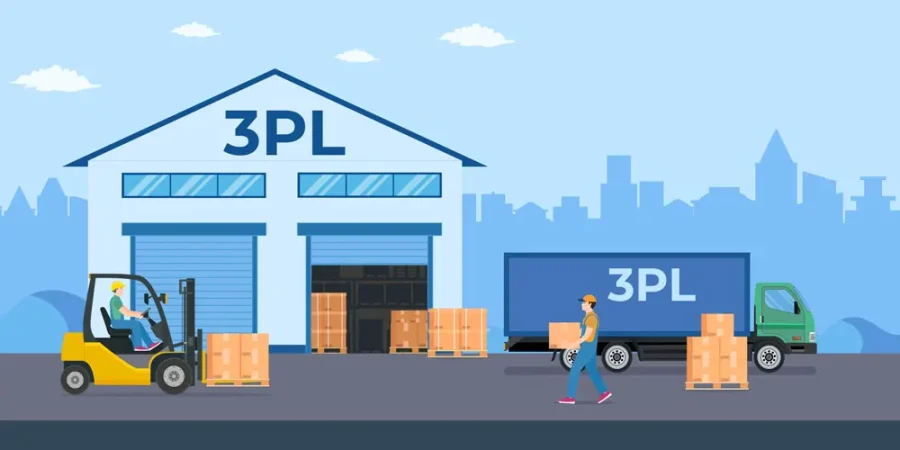
Businesses of all sizes are constantly under pressure to move goods faster, more efficiently, and for less money than ever before in a global economy that is becoming more and more linked. Third party logistics are useful in situations like these. When you hire an outside company to handle your logistics and supply chain, this is called third party logistics, or 3PL. Companies are hiring professionals to do more and more of the tasks that they used to do themselves, like warehousing, transportation, inventory control, and order fulfilment. Understanding third party logistics is important for any business that depends on moving physical goods. This is because global trade is getting more complicated.
What is logistics done by a third party?
As its name suggests, third party logistics is when a company hires an outside group to handle some parts of its supply chain. Some of these parts are shipping, storing, distributing, goods moving, clearing customs, and managing inventory. A company can rely on a third party logistics provider to provide these services on a contract basis rather than spending money on building warehouses, buying cars, or hiring specialised staff.
Third party logistics can cover a wide range of activities. Some service providers only give one thing, like transporting goods from one place to another. Others, on the other hand, cover the whole supply chain, from when raw materials arrive at a factory to when a finished product arrives at a customer’s door. One of the reasons why third party logistics is so well-liked in fields like retail, manufacturing, pharmaceuticals, and food distribution is its adaptability.
Why Companies Use Third-Party Logistics
Organisations choose to use third party logistics companies instead of handling logistics themselves for a number of good reasons. This one is easy to spot: cost. To set up and run an in-house logistics operation, you need to spend a lot of money on warehouse space, trucks, technology systems, and skilled workers. Businesses can turn fixed costs into variable costs by outsourcing their logistics to a third party logistics provider. This way, they only pay for the services they use instead of keeping infrastructure that may not be used when business is slow.
Know-how is another big plus. Third-party logistics providers are experts at moving and storing goods, so their methods have been fine-tuned over many years of use. They are aware of the rules and regulations, have built relationships with carriers, and have the technology to keep track of goods in real time. Using third party logistics to access this particular knowledge can be much more effective for a company whose main skill is not logistics but rather manufacturing or retail.
One more benefit is that it can be scaled up. There can be big changes in the demand for things, especially during busy times of the year like holidays or big sales. Third-party transportation providers can usually handle these changes by adding more warehouse space or transport capacity when needed and reducing their services during slower months. This gives companies the freedom to adapt to changing market conditions without having to worry about keeping extra capacity all year.
You should also think about the geographic reach. When you want to enter new markets, you usually need to know about the local details, like how to handle customs, how to use local transportation networks, and the rules that apply to your area. Third-party logistics companies that already have a presence in these markets can help businesses grow faster and with fewer problems than if they tried to build their own logistics network from scratch.
What Kinds of Third Party Logistics Services There Are
Third-party logistics is not a single, standard service. Instead, it is a broad term for a number of different services. The most well-known part is probably transportation management, which deals with moving goods by road, rail, sea, or air. In this space, providers organise carriers, plan routes, and make sure deliveries happen on time.
Storage and delivery are two more important parts of third party logistics. This means storing goods in a building that is run by the service provider and picking, packing, and sending out orders as they come in. In addition to shipping goods, many third party logistics companies also do labelling, kitting, and light assembly work in their warehouses.
The specialised area of third party logistics known as freight forwarding is responsible for organising the movement of goods across international borders. Coordinating multiple carriers, keeping track of paperwork, and making sure that customs rules in different countries are followed can all be part of this.
Third party logistics providers also frequently take care of inventory management, another important task. This means keeping an eye on stock levels, guessing what customers will want, and making sure that goods are restocked at the right time to avoid running out or having too much inventory. A lot of providers use complex software to let their clients see at any time how much stock is in different places.
Third-Party Logistics vs. Other Types of Outsourcing
Third party logistics should not be confused with related ideas like fourth party logistics, also known as 4PL. Third party logistics providers usually do specific logistics tasks. Fourth party logistics providers, on the other hand, manage a full supply chain and work with multiple third party logistics providers to make sure everything runs smoothly for their clients. Businesses need to know this difference in order to decide how much power they want to keep over their supply chain strategy.
Another related idea is dropshipping, where the goods that a store sells are sent straight to the customer by a supplier instead of the store itself. There is some overlap between dropshipping and third party logistics when it comes to outsourcing fulfilment, but the relationship between the two is usually much narrower and less integrated than in a real third party logistics partnership.
Problems that come up with using third-party logistics
Third party logistics has many advantages, but it also has some drawbacks. Loss of power is one of the worries that people often bring up. Businesses that outsource their logistics operations always give up some control over how their things are handled, stored, and moved. This can be especially scary for companies that put a lot of value on the customer experience, because mistakes made by a third party logistics service can hurt the brand even if the mistake came from somewhere else.
Communication issues can also come up. Clear and consistent communication between the client and the third party logistics provider is key to making the relationship work. This is especially true when it comes to predicting demand, handling exceptions, and fixing problems as they come up. Misunderstandings can cause delays, stock problems, or bad customer service if there aren’t good ways to talk to each other.
Another common problem is putting together different types of technology. The client’s own inventory management, order processing, and customer service platforms must often be seamlessly integrated with the provider’s systems for third party logistics to run smoothly. It may take a lot of time and money up front to get to this level of integration, especially when working with legacy systems.
Cost is often seen as a benefit, but it can also be a problem if it’s not handled well. Businesses need to make sure that the pricing structures that third party logistics providers offer stay fair and competitive over time. If they don’t, the savings they were hoping to make will be lost due to hidden fees or other charges.
How to Pick the Best Third Party Logistics Partner
Consideration must be given to a number of things before choosing a third party logistics provider. Businesses should look at a provider’s history, experience in the industry, and geographic reach to make sure it fits with their operational needs. It’s also important that the provider has the right technology. Companies with more up-to-date tracking and reporting systems can give you a lot more information and control than those who use old methods.
You should also look at the business’s financial security and ability to grow, especially if it expects to grow or if demand will change with the seasons. Far more likely to provide long-term value is a third party logistics provider that can grow with a business instead of getting in the way.
What’s Next for Third Party Logistics
Third party logistics will probably become even more important to how businesses run as global supply lines continue to change. New developments in robotics, data analytics, and artificial intelligence are changing how logistics companies handle storage and shipping, making it faster and more accurate than ever. Sustainability is also becoming more and more important. To meet rising environmental standards, many third party logistics providers are investing in greener shipping choices and more energy-efficient storage solutions.
In the end, third party logistics gives companies a way to be more productive, adaptable, and knowledgeable while letting them concentrate on their main tasks and delegate the difficult parts of their supply chain to experts. Third party logistics will unquestionably continue to be an essential component of successful business strategy for years to come as the needs of global trade grow.