
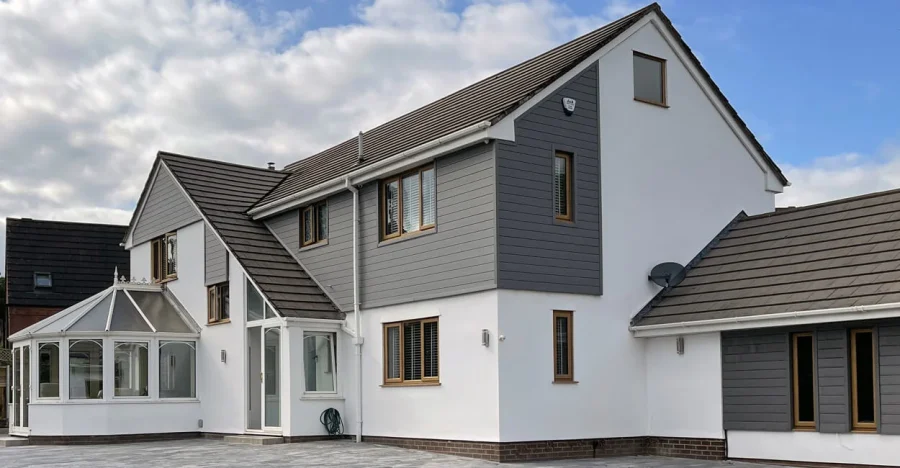
Composite cladding has become a popular choice for homeowners and tradespeople who want an exterior finish that balances appearance, durability and reduced upkeep. As gardens, properties and businesses evolve, the reasons for choosing cladding change too — from first-time buyers seeking easy-care façades to contractors specifying long-lasting materials for commercial projects.
At its core, composite cladding combines the look of wood with engineered materials designed to resist weathering and fading. The result is a versatile finish that can suit contemporary or traditional schemes, while offering a lower-maintenance alternative to untreated timber. That blend of aesthetic and practical advantages is why many people consider it when planning exterior upgrades.
Choosing the right cladding depends on the stage of life or scale of business involved: a young family will prioritise low maintenance and safety, an empty-nester may favour style and longevity, while a builder or landscaper will emphasise ease of installation, supply chain consistency and cost control. Recognising those differing priorities helps you pick products and installation methods that remain sensible as needs shift.
For those comparing suppliers and product ranges, a clear starting point is to look specifically for composite options that match the project’s intended lifespan and appearance; many timber merchants list composite options alongside decking and other composite products, allowing customers to compare finishes directly. These products can be viewed alongside complementary materials such as decking boards and trim, which simplifies specification and ensures colour and profile compatibility.
Working with a local supplier can make those comparisons more straightforward. Express Timber & Wood Ltd, for example, is a regional timber merchant near Grantham that supplies timber, composite decking and cladding to homeowners, tradespeople and landscapers across Nottinghamshire, Lincolnshire, Leicestershire and neighbouring counties. Having a nearby source can reduce lead times for materials and make it easier to inspect samples before committing.
This article outlines how preferences and priorities for composite cladding change at different life and business stages, and offers practical guidance on choosing materials, profiles and installation approaches that match your circumstances.
Young Homeowners: Prioritising Low Maintenance and Budget
First-time buyers and young families often want exterior finishes that stay presentable with minimal effort. Composite cladding is attractive in this context because it typically resists rot, insect attack and the need for regular sanding or staining that natural timber demands. Opting for simpler profiles and neutral colours can keep initial costs down while delivering a modern appearance that complements common brick or rendered façades.
From a practical standpoint, select composite boards with manufacturer-backed UV and colour-stability properties, and consider hidden-fix systems that reduce visible fixings and speed installation. For homeowners on a limited budget, buying off‑the‑shelf lengths and standard colours reduces complexity; local merchants who stock composite ranges and related trims can help assemble everything needed in a single order.
Growing Families: Safety, Durability and Ease of Repair
Families with young children tend to prioritise materials that cope with wear and accidental impact. Composite cladding offers scratch resistance and an ability to hold up under routine maintenance; where a board becomes damaged it is often simpler to replace a single board than to remediate a painted timber surface. Choosing wider profiles can translate to fewer joints and less opportunity for dirt to gather, which is useful for busy households.
When planning installation for a family home, factor in ventilation behind the cladding to avoid trapped moisture and select compatible flashings and trims. Also consider finishes that are easy to clean — some composites will respond well to a light wash or a gentle pressure-wash at a moderate distance, restoring appearance without complex treatments.
Established Homeowners and Retirees: Longevity and Aesthetic Choice
At stages of life where long-term stability and low-intervention upkeep are priorities, the emphasis shifts to selecting higher-grade composite profiles and proven colour ranges. Homeowners preparing to age in place or who plan to remain in their property for decades will value a cladding system with good dimensional stability and well-documented installation guidance, which reduces the likelihood of future problems.
For this audience, architectural detail matters: mitred corners, shadow gaps and matching trim pieces can elevate the look so that the cladding reads as a considered finish rather than a budget retrofit. It is worth requesting samples and viewing completed installations to understand how ambient light affects a chosen colour over time.
Tradespeople and Landscapers: Specification, Availability and Practicality
For builders, landscapers and contractors the priorities are different: consistency of supply, predictable lead times and material compatibility matter because projects operate to schedules and budgets. Composite cladding that is readily available in standard lengths and profiles reduces cutting waste and speeds installation.
Contractors should consider how composite cladding integrates with other elements they supply — for example, matching composite decking or suitable trims. Sourcing cladding and ancillary materials from a single merchant simplifies ordering and reduces the risk of colour mismatches. Trade accounts and local delivery options are additional practical considerations when specifying materials for multiple jobs across a region.
Choosing Profiles and Fixing Methods
Profiles range from square-edged boards to tongue-and-groove or shiplap styles. Hidden-fix systems produce a clean, contemporary aesthetic and protect fixings from weather, while face-fixed boards can be quicker to fit and easier to replace individually. The choice depends on the look you want, accessibility for maintenance and whether you expect future alterations.
Commercial and Rental Properties: Durability and Cost Lifecycle
For landlords and commercial premises managers the key considerations are longevity and minimising future expense. Composite cladding’s resistance to rot and reduced need for repainting make it suitable for rental properties where ongoing maintenance budgets are a concern. Selecting mid-range composite options that combine durability with modest initial cost can be a sensible middle ground.
When specifying for commercial projects, ensure substrates and fixings meet building regulations and that fire performance is considered where relevant. Working with a supplier who can confirm product datasheets and compatibility with standard building assemblies streamlines compliance and procurement.
Installation and Long-Term Care: Practical Advice for Every Stage
Installation is where many long-term outcomes are determined. Adequate ventilation behind cladding, proper flashings around openings and careful detailing at corners and junctions prevent moisture problems and help the cladding age gracefully. Even the best composite products perform best when installed to manufacturer guidance.
Maintenance is intentionally modest: periodic cleaning, checking for damaged boards and ensuring flashings remain intact is usually sufficient. Keep in mind that while composites reduce routine upkeep, they are a fixed finish; plan access for repair or replacement where needed, particularly on tall elevations.
Colour, Texture and Neighbourhood Considerations
Colour choice affects both aesthetics and practical performance. Lighter shades can reflect heat and reduce thermal movement in very sunny exposures, while darker tones deliver a rich appearance but can show dust more readily. Texture choices — from wood-grain to smoother finishes — influence how easily dirt is hidden and how weathering appears over time.
Where to Start: Matching Needs to Product Choices
Begin by defining the project’s expected lifespan, the level of acceptable maintenance and the visual outcome you want. If you anticipate changing circumstances — for example children leaving home, rental use or expanding a business — favour systems that are straightforward to repair and that integrate with other materials you may use later.
Discussing requirements with a knowledgeable local merchant can help translate those priorities into an appropriate specification. Suppliers who stock composite cladding and related products allow you to compare samples and assemble all necessary trims and fixings in one order, which simplifies both cost estimation and on-site logistics.
Final Thought
Composite cladding is adaptable across different life stages and business demands because it offers a blend of aesthetic flexibility, reduced maintenance and practical durability. By matching product choice and installation detail to your current needs — while anticipating likely changes — you can select a cladding solution that remains appropriate and attractive as circumstances evolve.