
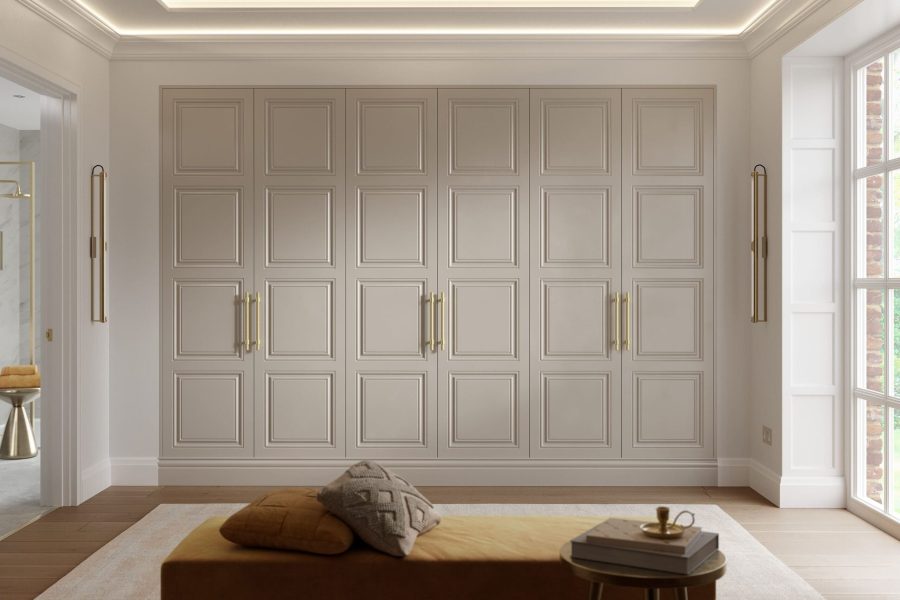
Fitted wardrobes can transform a bedroom by turning awkward corners into disciplined storage, and by making the most of available height and alcoves. For homeowners in Leigh‑on‑Sea, where property styles range from Victorian terraces to modern apartments, selecting the right materials and installation methods is as important as the layout itself.
Decisions about timber species, panels, fittings and finishing techniques determine how a wardrobe will look and how it will perform over time. Practical choices — not just aesthetics — influence maintenance, durability and suitability for a coastal climate. Understanding these options helps homeowners specify a solution that suits both their lifestyle and their interior design preferences.
Many people begin their search for local help by looking for fitted wardrobes Leigh-on-Sea, but what follows that first enquiry are a handful of key technical and practical choices that define the finished piece. Awareness of these options makes design conversations with a joiner far more productive.
Before engaging a maker, it helps to be clear about three practical aims: how much storage you need, how the wardrobe must fit physical constraints, and how you want the wardrobe to age. Answering those questions narrows material and method choices quickly and avoids unnecessary cost.
At a basic level, fitted wardrobes are assemblies of carcasses, doors and internal fittings. Each component has distinct material and method options — from solid timber doors on engineered carcasses to fully veneered panels or painted medium-density fibreboard (MDF). Choosing the right combination brings together appearance, stability and value for money.
Local bespoke joiners operating from a workshop in Essex can manufacture components to precise dimensions and offer a full installation service; this factory-to-site approach often produces neater results than assembling products entirely on site. It also provides the opportunity to match trims, panelling and skirting so that the wardrobe integrates with the room.
Materials: Solid Timber, Engineered Boards and Veneers
Solid timber is prized for its natural grain and longevity, but it is more susceptible to movement with humidity changes than engineered boards. For doors and visible elements, solid timber or solid timber veneers lend warmth and a traditional character. For the structural carcass, plywood or moisture-resistant MDF are common choices because they combine stability with accuracy during manufacturing.
Engineered boards such as plywood and MDF also accept paint and specialist finishes more consistently than many natural timbers. Plywood is stronger and lighter than solid chipboard, making it a good choice where large spans are required. MDF provides a smooth, uniform surface that is ideal for painted, shaker or handleless door styles.
Veneers are thin slices of real timber bonded to a stable substrate. They give the appearance of solid wood while reducing cost and lowering the risk of warping. A veneered slab door finished with a clear lacquer can look indistinguishable from solid timber but behave more predictably in variable indoor climates.
Selecting Timber Species and Finishes
Light species such as oak and maple bring a contemporary, airy feel, while darker woods like walnut offer a richer look. For painted finishes, the underlying board matters more than species: a high-quality priming and spray finish on MDF will achieve a crisp, durable surface that suits modern interiors. Homeowners should consider whether they prefer a painted or stained finish, bearing in mind maintenance and the effect of sunlight on wood tones.
Construction Methods: Joinery, CNC and Panel Assembly
Traditional joinery techniques such as mortise-and-tenon or dovetail joints remain relevant for exposed features and drawers, offering mechanical strength and longevity. For carcasses and repetitive components, modern CNC (computer numerical control) machining enables highly accurate cutting and consistent tolerances, simplifying installation and ensuring doors align precisely.
Face-frame construction gives a visible timber framework around carcasses and suits period homes; frameless (or European) construction maximises internal space and is widely used in contemporary fitted furniture. Both methods can be well made and attractive — the choice depends on style preference and how doors are hung or slid.
Doors and Hardware: Hinged, Sliding and Handleless Options
Hinged doors are straightforward, provide full access and are suitable where there is clearance for swing. Sliding doors save floor space and are often used in shallow rooms or where a bed sits close to the wardrobe. Modern sliding systems with soft‑close mechanisms and precision runners reduce noise and improve longevity.
Handleless doors — whether push-to-open, recessed finger pulls or integrated rails — create a clean aesthetic but require carefully matched door thickness and hardware to feel robust. Quality hinges, runners and drawer slides make a perceptible difference in daily use, so it is worth specifying branded or proven hardware rather than the cheapest available options.
Internal Organisation: Making Materials Work for Storage
The choice of internal fittings — fixed shelves, drawers, pull-out shoe racks, tie organisers and adjustable hanging rails — affects how well a wardrobe fulfils its purpose. Materials inside the carcass need not be the same as the external finish: for example, textured or laminated boards for shelf surfaces can be more scratch-resistant than painted MDF.
Drawers benefit from solid bottoms or thick plywood bases to avoid sagging under heavy loads. Soft‑close drawer runners and drawer boxes with dovetail or mechanical joints enhance long-term usability. For accessories such as pull‑out trouser rails or jewellery inserts, simplicity of mechanism matters more than ornate design.
Finishing Techniques and Environmental Considerations
Paint, lacquer and oil finishes each have different visual and maintenance profiles. Spray-applied finishes give a factory-standard smoothness and are especially effective on MDF and veneered surfaces. Oils and waxes emphasise timber grain and can be refreshed locally, but they do require occasional maintenance to retain the original look.
Where indoor air quality is a priority, low-VOC finishes and formaldehyde-free board options are readily available. Discussing these preferences early in the specification process allows a joiner to source suitable materials without affecting lead times significantly.
Site Work: Survey, Installation and Dealing with Challenges
A precise site survey is the foundation of a successful fitted wardrobe project. Measurements should account for skirting heights, window reveals, radiator positions and cornices. Where walls are not perfectly plumb, standard practice is to pack or scribe the carcass so doors remain perfectly flush and gaps are consistent.
Coastal properties in Leigh‑on‑Sea can experience slightly higher humidity and salt in the air; selecting stable engineered boards for carcasses and avoiding untreated softwoods for exposed elements will reduce maintenance. Additionally, providing adequate ventilation in the bedroom and ensuring any paint or lacquer cures fully before use helps the installation settle well.
Budgeting, Lead Times and Practical Trade-Offs
Cost depends on materials, complexity of internal fittings and the finishing method. Solid timber doors and bespoke panelling will increase the invoice compared with painted MDF, but they also deliver a distinct character. Equally, high-quality hardware is a modest fraction of the total cost yet contributes substantially to perceived value and everyday performance.
Manufacture in a workshop followed by professional installation is often the best compromise: it keeps on-site disruption to a minimum while allowing precision assembly. Typical lead times vary with workload and material availability, so discussing realistic delivery windows at the design stage avoids disappointment.
Working with a Local Bespoke Joiner
A reputable local joiner will guide you through material samples, layout permutations and finish options, translating preferences into technical drawings and a clear specification. If you already have a preferred aesthetic, bring physical samples or photographs; if not, a joiner can propose combinations that suit the property and your storage needs.
Choosing a professional who offers design, manufacture and installation from a single workshop simplifies communication and quality control. That integrated service model helps ensure the materials and methods chosen in the design meeting are replicated exactly in the finished installation.
Selecting the right materials and methods for a fitted wardrobe is a balance between appearance, durability and practicality. By thinking through construction details — from the carcass substrate to door style and internal fittings — homeowners in Leigh‑on‑Sea can commission wardrobes that look cohesive with their interiors and work flawlessly for years. A well‑specified wardrobe rewards the extra attention to materials and methods with superior everyday use and an enduring finish.
Get in Touch:
Estuary Joinery
Nursery, Windsor Gardens UNIT 17 – Magees, Hockley SS5 4LH
07943 123594
estuaryjoinery.co.uk