

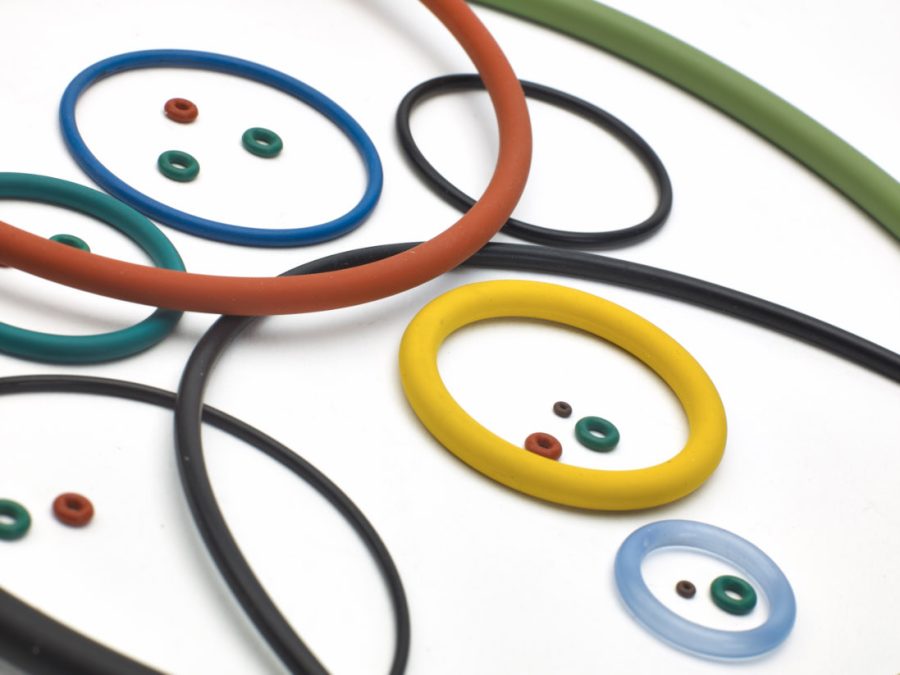
In the intricate realm of industrial manufacturing and engineering, specific components are essential to the overall reliability and efficacy of machinery. O-rings are distinguished among these essential components, as they are essential components that are used in a variety of applications. These innovative circular closures have been specifically engineered to prevent the leakage of gases and fluids, thereby guaranteeing the smooth operation of a variety of mechanisms. The importance of O-rings is immeasurable, as they are essential for the prevention of malfunctions, the extension of the lifespan of apparatus, and the enhancement of performance.
O-rings are sealing devices that are both simple and effective, and they are typically composed of elastomeric materials, including rubber, silicone, or fluorocarbons. The design is characterised by a toroidal shape (or a doughnut shape), which allows for the formation of a secure closure when compressed between two surfaces. The efficient barrier against environmental factors is guaranteed by the ability of O-rings to fit into channels that are aligned with the mating surfaces, depending on the application. This design enables O-rings to remain operational in a variety of industrial applications, despite the presence of varying pressures and temperatures.
The automotive sector is one of the primary industries that benefits from O-rings. Engines and hydraulic systems are among the numerous systems that necessitate dependable sealing solutions in vehicles. O-rings are utilised in fuel systems to prevent leakage that could result in potential safety hazards. Additionally, they are employed in the cooling systems of automobiles to prevent fluid leakage and maintain pressure. These systems would be considerably more susceptible to malfunctions in the absence of O-rings, which would result in elevated maintenance expenses and compromised vehicle safety.
O-rings are also essential in the aerospace and aeronautical industries. The reliability of components is of the utmost importance in these high-stakes industries, as the tolerance for failure is minimal. O-rings are employed in gasoline tanks, hydraulic systems, and a variety of engine components, where their capacity to endure extreme conditions is particularly advantageous. The materials employed in aerospace applications for O-rings are frequently specifically designed to withstand high temperatures and corrosive environments, thereby guaranteeing that they not only function under duress but also resist deterioration over time.
In hydraulic and pneumatic systems in manufacturing facilities, O-rings are ubiquitous. They are indispensable for the operation of valves, cylinders, and actuators, which facilitate the movement of fluids and gases throughout devices. The presence of O-rings guarantees that these systems maintain the required pressure levels without the risk of leakage that could compromise safety and functionality. The significance of O-rings in hydraulic applications is impossible to overstate, as any malfunctions could result in not only production delay but also substantial safety hazards for employees.
The food and beverage industry also significantly depends on the efficiency and durability of O-rings. In processes where hygiene and contamination prevention are essential, O-rings guarantee that seals are both effective and secure, thereby preventing any potential leaks that could result in safety violations or spoilage. They are utilised in a variety of apparatus, including pumps, valves, and mixers, to ensure the consistency and cleanliness of the products that are being processed. The health and safety regulations are strictly adhered to when selecting the materials for O-rings in food applications, thereby guaranteeing that consumers are not at risk.
O-rings are essential components of both conventional and renewable energy systems in the context of energy production. O-rings are essential in the maintenance of seals at high pressures in steam and gas turbines in fossil fuel power facilities. O-rings are also employed in wind turbines and hydropower facilities in the renewable energy sector. These seals are essential for preventing hydraulic system leakage. In these dynamic sectors, where efficiency and reliability are essential for sustained operations, O-rings are indispensible due to their versatility.
Additionally, O-rings play a critical but largely unacknowledged function in a variety of consumer products, including electronics and appliances. In order to prevent the leakage of refrigerants and water, numerous household appliances, including refrigerators and laundry machines, incorporate O-rings into their designs to guarantee that seals remain airtight. The significance of O-rings in even the most mundane applications is underscored by the fact that their failure can result in catastrophic consequences in everyday objects.
In addition to their functionality, it is important to consider that the utilisation of O-rings can result in more sustainable operations. Industries can enhance their energy efficiency and reduce waste generated from leakage by utilising O-rings that provide exceptional sealing capabilities. This is particularly relevant in sectors that are transitioning towards sustainability, as squandered resources result in not only financial losses but also a heightened environmental impact.
The design and manufacturing processes for O-rings have also evolved as technological advancements continue to progress. The modern O-ring can now be customised to accommodate specific applications and environments in terms of size, material composition, and durability. Industries can now design O-rings to endure not only liquids and gases, but also aggressive compounds, high-pressure conditions, and extreme temperatures. This level of customisation expands the scope of their applicability, enabling industries to enhance their performance and mitigate operational risks.
The selection of O-rings is significantly influenced by their compatibility with a variety of media. It is imperative that the O-ring functions as intended in its intended application, as various materials exhibit distinctive chemical and physical properties. The specific properties of the fluids or gases involved, as well as environmental exposure and mechanical stress, are frequently used by manufacturers to select O-ring materials. For example, Viton-based O-rings are frequently employed in applications that involve exposure to corrosive chemicals, while silicone-based O-rings are frequently chosen for applications that necessitate superior thermal stability.
Additionally, the ubiquitous use of O-rings is enabled by their straightforward design. In fast-paced industrial environments where time is of the utmost, the toroidal shape facilitates effortless installation and maintenance. The accessibility of replacing O-rings enhances productivity and reduces operational challenges, as equipment downtime due to repair or replacement of seals can be costly.
O-rings are essential components that guarantee the safety and efficiency of machinery and systems in numerous industries, despite their diminutive size. The economic implications of employing high-quality O-rings are significant. They assist in the prevention of leakage, thereby reducing the potential for catastrophic failures, downtime, and maintenance costs. Investment in high-quality O-rings is a necessity rather than a luxury in industries where machinery operates under strict tolerances and pressures, as the failure of a single O-ring can have far-reaching consequences.
In summary, O-rings are indispensable components for an extensive variety of industrial applications, acting as the unsung champions of sealing technologies. Their significance as essential components in guaranteeing operational reliability and safety is underscored by their design, versatility, and critical application in a variety of sectors, including aerospace, automotive, and more. O-rings will continue to be at the vanguard of engineering solutions, adapting to meet the demands of modern technology, as industries continue to innovate and evolve. The importance of high-quality seals in engineering design and maintenance practices is underscored by their role in enhancing performance, reducing waste, and assuring safety, which solidifies their position as indispensable elements in industrial applications.