

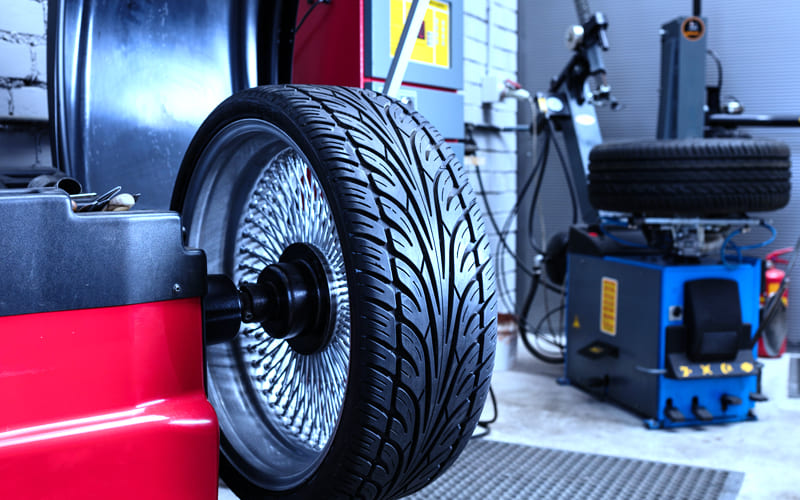
Wheel balancers are one of the most important pieces of equipment in modern automobile maintenance, acting as the foundational technology that keeps cars running smoothly, safely, and effectively. These advanced tools have transformed the way professionals approach tyre and wheel repair, turning what was previously a difficult and inaccurate process into a streamlined, exact operation that produces consistent results.
The primary aim of wheel balancers is to identify and fix imbalances in wheel and tire assemblies. When wheels revolve at high speeds, even little weight differences can cause vibrations that influence vehicle performance, passenger comfort, and component durability. Wheel balancers handle this issue by carefully measuring imbalances and advising where correction weights should be placed for perfect equilibrium.
The physics underlying wheel balancers is based on rotational dynamics and centrifugal force. As a wheel assembly spins, any unequal weight distribution generates forces that cause vibrations throughout the vehicle. These vibrations can prematurely damage tires, suspension components, and steering systems, as well as make passengers feel uncomfortable when driving. Modern wheel balancers use modern sensor technology to detect minute imbalances with astonishing accuracy, typically measuring differences as tiny as a fraction of an ounce.
Contemporary wheel balancers come in a variety of layouts, each tailored to specific workshop needs and accuracy standards. Static wheel balancers, the most basic form, detect imbalances by letting the wheel to settle naturally, with the heavy spot spinning to the bottom position. While these devices are inexpensive and useful for simple applications, they cannot detect dynamic imbalances that arise while wheels are in motion.
Dynamic wheel balancers are the industry standard in professional automobile facilities. These complex devices spin the wheel assembly at specified rates while measuring forces across many surfaces. This feature enables wheel balancers to identify both static imbalances, in which weight is unevenly distributed across the circumference, and dynamic imbalances, in which weight distribution fluctuates over the width. The ability to detect and fix both forms of imbalance makes dynamic wheel balancers essential for obtaining peak wheel performance.
Computerisation and digital technologies have significantly improved the operation of current wheel balancers. Contemporary machines include sophisticated touchscreen displays that walk technicians through the balancing procedure step by step. These devices automatically determine the exact weight necessary and show where correction weights should be placed. Many wheel balancers also include databases of wheel specifications, which allows them to automatically create settings based on the wheel and tire combination being balanced.
Advanced wheel balancers frequently incorporate functions that go beyond simple balancing functionality. Some versions have tire pressure monitoring features, which allow technicians to check and alter tyre pressures throughout the balancing process. Others have built-in diagnostic systems that may detect faults such as bent wheels, damaged tires, or suspension difficulties that may impair wheel performance. Because of these extensive characteristics, current wheel balancers are useful multi-purpose equipment rather than single-function machines.
Wheel balancers’ accuracy has increased greatly over the years, with current devices capable of identifying imbalances with extreme precision. High-end wheel balancers can detect weight differences as tiny as 0.25 ounces, guaranteeing that even slight imbalances are addressed. This degree of precision is especially critical for high-performance automobiles and newer cars equipped with sophisticated suspension systems that are more sensitive to wheel imbalances.
Calibration and maintenance of wheel balancers are critical for achieving constant precision. Professional workshops often adhere to tight calibration schedules to ensure that their wheel balancers continue to perform within defined tolerances. To evaluate and modify the machine’s accuracy, certified calibration weights are used, and methods specified by the manufacturer are followed. Regular maintenance also include cleaning sensors, lubricating moving parts, and updating software to maintain peak operation.
Different types of vehicles necessitate distinct procedures when employing wheel balancers. Passenger automobiles usually require basic balancing processes, although commercial vehicles, motorbikes, and high-performance sports cars may necessitate specialist approaches. Some wheel balancers have adaptors and attachments that allow them to handle a broad range of tire sizes and kinds, from small motorcycle wheels to big commercial truck tyres.
The installation of corrective weights during the balancing procedure necessitates both accuracy and technique. Wheel balancers show not only the amount of weight required, but also the exact angular location where weights should be applied. Technicians must verify that weights are securely fastened and positioned to create the necessary balance while retaining wheel aesthetics and aerodynamics. Modern wheel balancers frequently provide several weight placement choices, allowing technicians to select designs that reduce visual effect while maintaining ideal balance.
Quality control techniques for wheel balancers are critical for sustaining service levels. Many workshops use verification techniques in which balanced wheels are rechecked to ensure that the balancing procedure was successful. Some wheel balancers include built-in quality control mechanisms that automatically evaluate the final balance once weights are added, providing further confidence that the job was done correctly.
Environmental issues have affected the creation of current wheel balancers, with manufacturers emphasising energy efficiency and minimising environmental effect. Many modern devices include energy-saving settings that minimise power usage during idle periods. Furthermore, the accuracy of current wheel balancers contributes to waste reduction by minimising the number of correction weights required and the frequency with which processes are repeated.
Training and certification programs for wheel balancers guarantee that professionals have the knowledge and skills required to operate these complicated devices. Proper training includes not just machine operation but also a grasp of wheel dynamics, weight positioning strategies, and troubleshooting methods. Many equipment manufacturers provide thorough training programs that combine academic knowledge with hands-on experience.
The integration of wheel balancers and workshop management systems has improved automobile servicing operations. Modern equipment may frequently link to workshop computers, automatically logging service data and producing reports for clients. This interface enables workshops to keep accurate service records while providing clients with complete documentation of the work performed on their cars.
Future improvements in wheel balancer technology will continue to prioritise increasing automation, greater accuracy, and improved user interfaces. Artificial intelligence systems that can automatically diagnose wheel and tire issues, robotic weight placement systems, and enhanced sensors that allow even more precise imbalance detection are examples of emerging technology.
Professional tire balancers have economic benefits that go beyond immediate service income. Properly balanced wheels help to lengthen tire life, enhance fuel efficiency, and decrease wear on vehicle components. These benefits provide value to clients while establishing workshops as quality service providers that contribute to overall vehicle maintenance and performance.
Understanding wheel balancer capabilities and limits allows automotive experts to make more educated judgements about equipment selection and maintenance techniques. While these devices are extremely complex, they require appropriate operation, frequent maintenance, and qualified specialists to get the best results. Investing in high-quality wheel balancers and sufficient training benefits workshops, technicians, and customers by improving service quality and vehicle performance.