

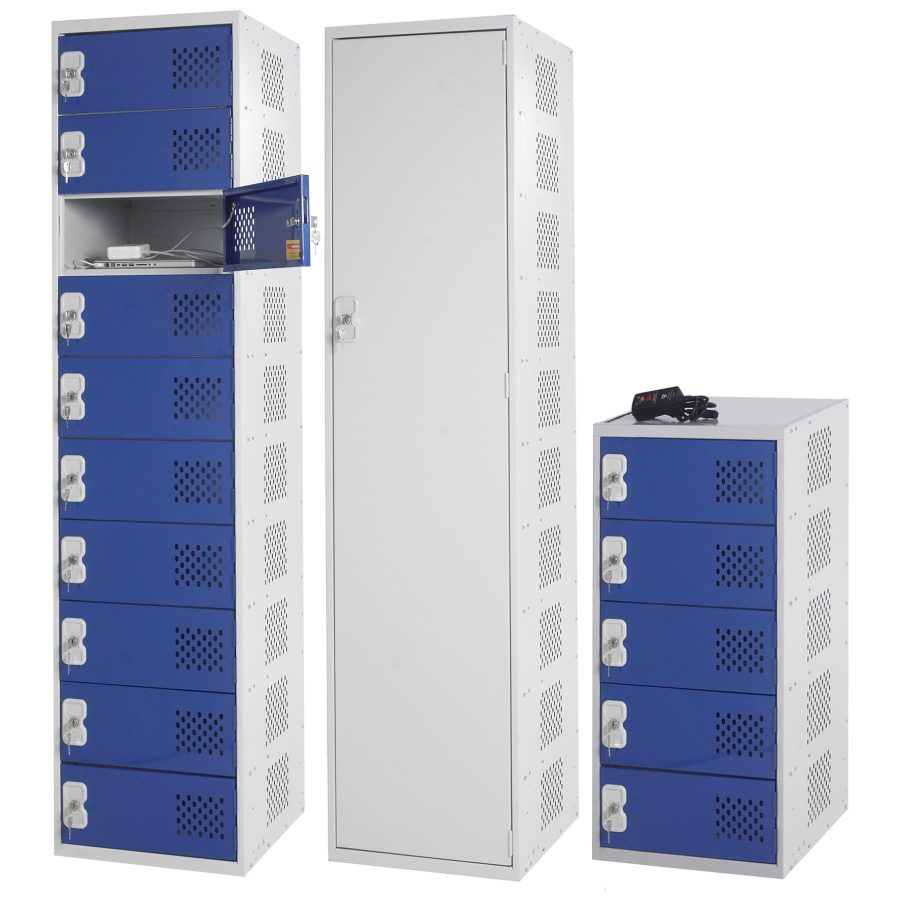
Over the past decade, worldwide education has shifted from hefty textbooks and blackboards to a fully integrated digital ecology. As universities embrace one-to-one computing, administrators face enormous structural and logistical challenges managing, securing, and maintaining a massive fleet of pricey electronic gadgets. The quick, widespread adoption of specialised laptop lockers for school facilities is due to the urgent logistical need to keep these instruments working and safe during the tough academic day. These specialised storage systems are more than just a hardware repository; they expedite regular school operations by combining high-level physical security with high-capacity electrical charging.
When schools adopt digital learning methods, they often find that campus infrastructure cannot handle the electrical load of hundreds of student devices charging at once. Classrooms built decades ago usually have few wall outlets, resulting in tangles of extension wires across aisles that pose tripping risks for kids and teachers. Administrators may create centralised, safe, and efficient charging hubs that reduce classroom power outlet strain and physical safety risks by strategically integrating smart laptop lockers for school buildings. These intelligent charging units use advanced internal circuitry to deliver steady, regulated electrical currents to multiple devices without overloading local electrical grids or tripping campus circuit breakers.
The tremendous financial expenditures modern districts make in mobile computing programs require sophisticated security against unintentional physical damage and opportunistic theft. Custom laptop lockers for school campuses are essential since hallway lockers lack the internal infrastructure, specialised space, and electrical access needed to secure critical gadgets. These steel-reinforced storage containers avoid theft and provide administrators piece of mind when kids leave their gadgets unattended during PE, lunch, or extracurricular assembly. Heavy-duty locking mechanisms and tamper-resistant exterior design keep any institutional or personal property where it belongs while not in use for classroom teaching.
Academic coordinators report that battery depletion disrupts regular academic processes, stopping lesson preparations and fragmenting student involvement. A student with a dead gadget battery during a morning science lab or afternoon maths test is locked out of learning, requiring professors to rush for paper assignments or loaner devices. Smart laptop lockers for school tackle this problem by giving students a convenient place to charge their devices during breaks, lunches, and study halls. This continuous power supply lets students focus on academic material rather than worrying about a fast dwindling battery symbol.
When districts build centralised laptop lockers for school operations, IT departments in educational sectors become much more efficient. School technology coordinators spend a lot of time fixing devices, monitoring inventory, and detecting battery degeneration from improper charging or unauthorised third-party power cords. Built with integrated cable management frameworks and factory-certified power supply, these charging lockers optimise thermal and electrical conditions to prolong battery life. This methodical approach to device maintenance greatly decreases the daily frequency of support tickets at technology helpdesks, freeing IT staff to focus on instructional assistance and network security instead of cable management.
Modern laptop lockers for school promote accountability, organization, and digital citizenship. A university that gives locker compartments to students or uses an organised check-in system encourages students to actively manage and care for their pricey instruments. Having a designated, safe, and powered room to keep their equipment enables students to include device care into their daily routines, fostering habits that match current professional settings. This systematic process reduces hardware misplacement, loss, and neglect, saving districts thousands of dollars in replacement and repair expenses.
The space optimisation of current educational architecture is another reason institutional designers uniformly recommend superior laptop lockers for school floor layouts. Traditional storage options are big and efficiently use vertical space, causing congested areas during class breaks. In contrast, modern charging lockers include space-saving, high-density vertical layouts that maximise device storage per square foot, making them ideal for tight corridors, media centers, common spaces, and scientific laboratories. Schools can retain open, flexible traffic patterns while offering complete, easily accessible charging infrastructure near significant instructional zones with this clever use of physical space.
Additionally, these sophisticated storage units enable educational institutions close equity gaps that often develop when adopting comprehensive digital learning efforts across various student groups. Not every student has a stable, safe home with consistent energy or enough power outlets to charge their gadget every morning before school. Administrators establish a reliable equaliser by providing universally accessible laptop lockers for school populations, ensuring that every student, regardless of socioeconomic background or living situation, has daily access to fully charged, functional technology. This proactive structural assistance creates an inclusive academic atmosphere where no student is left behind owing to home power issues.
The many benefits of high-quality laptop lockers for schools must also be addressed, including student health and wellness. Every afternoon, students must carry many heavy electronics, charging bricks, and external battery packs home in overstuffed backpacks, which can cause persistent back strain, bad posture, and musculoskeletal issues. A secure, temperature-controlled, and continually powered campus area where electronics may securely stay overnight reduces students’ daily physical burdens when travelling between home and college. This modest campus storage policy change actively encourages greater physical fitness in developing teenagers while keeping gadgets fully charged and available for the following school day.
The latest laptop lockers for school districts offer unparalleled transparency and asset tracking for critical campus property. Many of these advanced storage systems include network connection, allowing campus IT administrators to remotely monitor occupied compartments, power usage, and access records in real time. Administrators may quickly check digital timestamps to determine when a locker door was unlocked and by which user credential if a device goes missing or an unauthorised entrance happens. This high level of responsibility greatly reduces internal theft and vandalism, making campus safer and more transparent.
Modern laptop lockers for schools include sophisticated engineering that boosts environmental sustainability. These sophisticated charging stations use smart eco-timers and sequential charging cycles to dynamically distribute electricity based on device battery levels instead of taking power from the grid 24/7. Once a gadget is fully charged, the technology smartly restricts electricity to that compartment, eliminating phantom energy use and dramatically decreasing the campus’s carbon impact. School districts may reinvest public monies in key instructional resources and classroom teachers because to this energy-efficient operation’s long-term utility cost reductions.
Besides regular operations, customisable laptop lockers for school facilities keep these storage investments current and useful as educational technology requirements change. Modular internal components and changeable power connections allow these devices to be modified to fit changing device size, port types, or new educational hardware categories. The charging infrastructure stays intact and flexible if a school switches from laptops to tablets or bigger digital tablets. This future-proof design concept ensures that initial capital investment pays huge rewards and steady use for years to come.
Finally, reliable laptop lockers for school classrooms reduce a huge source of everyday concern for teachers, giving them peace of mind. Teachers may confidently create technology-rich lesson plans knowing that their pupils will have working, fully powered devices that can run intense instructional applications. Teachers no longer have to spend the first 15 minutes of every lesson scrambling for charges or adjusting curriculum because 25% of the class has dead batteries. These lockers have become essential to modern schooling by methodically addressing power, security, space, and management.