

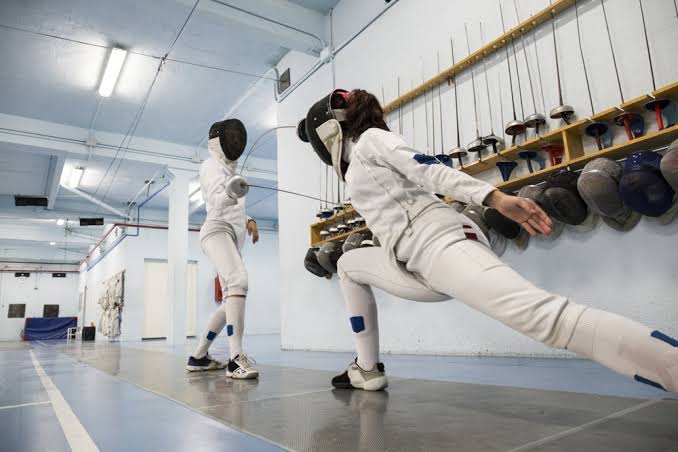
A fencing sword transcends being merely a blade for scoring points. The construction, target area, and scoring rules influence a fencer’s movement, attack strategies, and defensive techniques. Modern sporting fencing includes three weapons: foil, épée, and sabre. While they possess some similarities, each offers a unique competitive experience. Foil focuses on delivering precise strikes aimed at a specific target. Épée exposes the entire body to potential attacks, whereas sabre permits both cutting actions and thrusts. Grasping these distinctions aids newcomers in navigating competitions and identifying the unique characteristics that define each discipline.
What sets each fencing sword apart?
The most distinct differences relate to the method of delivery and the target area of the hit. Foil and épée are thrusting weapons, which means that valid touches must be delivered with the point. Sabre allows for contact with both the blade and the point. Target areas vary significantly: foil emphasises the torso, épée encompasses the entire body, and sabre is aimed at the upper body, excluding the hands. As a result, selecting a fencing sword involves opting for a specific array of tactical challenges, rather than merely picking a favoured blade shape or weight.
Foil: Accuracy Aimed at a Limited Objective
The foil fencing sword features a lightweight design, characterised by a slender, flexible blade and a compact circular guard. The maximum overall length is 110 centimetres, and the total weight must not exceed 500 grams. These limits pertain to the assembled weapon as a whole, rather than just the blade itself. Foil’s restricted target necessitates precise point placement: merely touching an opponent does not suffice unless the point contacts a valid scoring surface. The arms, legs, and head extend beyond the target, highlighting the necessity for precise control of the blade during attacking exchanges.
Foil also employs priority, often referred to as right of way. When both fencers register touches during an exchange, the referee evaluates the sequence of actions instead of merely granting the point to the one who seems quicker. A properly executed attack can take precedence, while an effective parry can open the door for a priority riposte, or counterattack. This positions the foil fencing sword within a tactical dialogue: threaten, elicit a response, defend, and counter. Recognising the importance of sequence is crucial to understanding why two illuminated scoring lights do not necessarily result in two points.
Épée: The Whole Body as a Target
The épée fencing sword is notably heavier than the foil, featuring a larger bowl-shaped guard and a blade characterised by a triangular cross-section. The maximum overall length is 110 centimetres, while the weight must not exceed 770 grams. The larger guard serves a clear practical function: the hand is a legitimate target and requires safeguarding. In contrast to foil, épée permits a scoring touch on any part of the opponent’s body, ranging from the mask to the foot. The design and rules thus render the defence of the nearest exposed targets a crucial factor to consider.
In épée, there is no right of way. A valid touch can score even if the fencer does not first establish attacking priority, and sufficiently close touches can result in a double hit. This alters the importance of an attack: achieving a successful landing does not automatically equate to evading a point against you. An épée fencing sword can pose a threat to the wrist while its wielder stays outside the comfortable reach of the opponent’s torso. Distance, timing, and the capacity for safe withdrawal become intricately linked. The whole body presents opportunities, yet each step forward can also reveal a target.
Sabre: Precision Strikes and Upper-Body Focus
The sabre fencing sword is distinct primarily because it allows for both cutting touches and thrusts. The maximum overall length is 105 centimetres, and it must weigh under 500 grams. A curved guard shields the hand, while the blade facilitates scoring actions that are not solely reliant on precise point placement. The valid target encompasses the head, torso, and arms above the waist, while excluding the hands. These rules set sabre apart from the point-only weapons and clarify its distinctive sweeping blade movements.
Similar to foil, sabre also employs the concept of right of way. A fencer cannot depend only on being the first to make contact when the opponent also scores a touch; it is the referee’s responsibility to analyse the actions and establish priority. Nevertheless, the potential for scoring through a cutting action imparts a distinct quality to exchanges. A sabre fencing sword has the ability to threaten multiple upper-body targets by altering the direction of the blade. Attacks, parries, and immediate replies continue to hold significance, yet the hitting actions accessible vary from those found in foil. Observing the preparations prior to contact aids in comprehending decisions that may seem sudden.
Comparing the Three Weapons
Weight by itself does not account for the behaviour of a fencing sword. Foil and sabre have the same upper weight limit, but their allowed scoring actions and target areas create distinct requirements. Foil instructs the fencer to aim the point at a designated target area. Sabre allows for blade contact over a wider upper-body area. Épée features point-only scoring, encompasses the largest target area, and operates without a priority convention. These relationships hold greater significance than merely considering one weapon as faster, heavier, or harder. Every discipline offers rewards for solutions that align with its specific rules and opportunities.
Comprehending Electrical Scoring
Electrical scoring highlights the differences between weapons, yet a light does not always determine who earns a point. Foil and épée utilise point mechanisms to register qualifying contact, while sabre permits electrical registration via blade contact with the valid target. Foil can also signify an off-target touch, which halts the exchange without granting a point for that contact. An épée fencing sword does not have an equivalent off-target body area, as the entire body is considered valid for scoring. In priority weapons, the referee continues to interpret the exchange when both sides record touches.
Choosing a Weapon That Aligns with Your Interests
The differences offer a valuable foundation for considering individual preferences. Individuals who are drawn to meticulous tasks and organised interactions might find foil to be quite appealing. Individuals fascinated by comprehensive body targeting and the potential for double hits might find épée to be more appealing. Individuals with an interest in cutting actions and upper-body attacks might find themselves attracted to sabre. These represent interpretations of the rules, rather than definitive categories of personality or ability. No fencing sword is limited to those who are aggressive, patient, tall, or naturally quick; the significant comparison lies in the challenges that each discipline offers.
Learning to read a bout
Identifying the fencing sword instantly provides a viewer with a structure to comprehend the unfolding action. With foil, observe the landing of the point and the progression of priority. When using the épée, pay attention to exposed hands, variations in distance, and whether both fencers achieve a score. With sabre, observe the dynamics of upper-body attacks and the interplay between offensive and defensive manoeuvres. What first appears as a blur becomes clearer when the weapon’s rules are understood. The three swords are situated in a sporting context, yet each poses a distinct question: where can you strike, how can you strike, and whose action secures the point?