
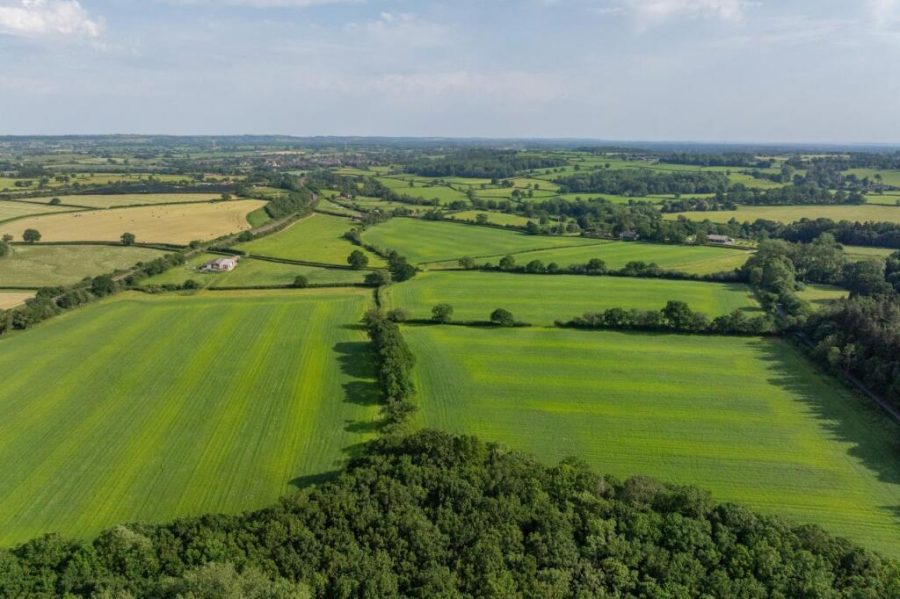
A gentle change is taking place over the British countryside. Farmers and landowners who could have gone decades without giving any thought to what their land is worth, are now aggressively asking the question. Whether it’s typed into a search engine like “value my land” or mentioned during a chat with an accountant, solicitor or neighbour, the demand for a clear, professional figure has never been greater.
There are several reasons. Some are motivated by tax planning, some by a changing farming market, and many by a basic desire to understand the biggest asset their family possesses. Land is seldom only a financial holding. It’s a house. It’s a business. And, often, it’s a legacy. Its usefulness as the foundation of competent decision making in the midst of a quickly changing rural setting is now appreciated.
Getting Ready to Sell
The most common reason for getting a value is the desire to sell, all or part of the company. “When people say ‘value my land’, many landowners are testing the water before committing to something. They may be approaching retirement and thinking about selling a difficult field, a plot with growth potential or even the whole holding.
Realistic valuation avoids two major faults of sellers. establishing too high an asking price might result in land lingering on the market, but establishing too low an asking price means leaving money on the table. In a sound assessment, soil quality, access, location, drainage, planning potential, local demand and the larger market all need to be considered. It gives sellers a defensible opening bid and the courage to negotiate with purchasers who may be significantly more familiar with the market than they are.
Succession Planning and Inheritance Tax
In recent years perhaps no topic has more sharply focussed rural minds than inheritance tax. Land values have grown dramatically over the longer term and changes in tax reliefs have left many families unsure about what their estate may owe in future. For people who have large holdings, even little modifications to the rules can have big effects.
With a wider succession plan now, many families are requesting an expert to value my land. The accountants and solicitors may model numerous situations – for example gifting land across a lifetime, restructuring ownership or putting assets into trust – when they have a precise amount to work from. Any such planning is a guess without a reliable valuation
There’s a human component to it, too. Succession may be a tricky issue for farming families when one child may want to carry on the business while another has taken a different career path. An independent value my land appraisal gives an objective number, so families may talk about dividing assets fairly without mistrust or animosity.
Financing and Borrowings secured
Farming is a capital demanding business and land often is the security behind loans. Lenders would typically want to see a current appraisal before they agree to lend to a farmer wanting to buy new machinery, create contemporary livestock buildings, add irrigation or buy neighbouring land.
While lenders may not insist on it, many landowners feel it wise to have their own value done. Knowing the present value of land enables them to gauge how much debt is sensible and whether a particular investment is financially justified. When people tell a professional they need to value my land before submitting a funding application, they’re generally looking for more than just a number; they want comfort that their plans are solid.
Other uses and diversification
Diversification has been a feature of British farming for years and the pace is quickening. Today farm shops, holiday accommodation, event venues, solar systems, equestrian amenities and storage units are all typical. Each of these endeavours modifies the nature of the land and, perhaps, its worth.
Landowners considering a new venture typically want to know the difference between the agricultural value of a piece and its worth with an alternative use in place. A barn that could be converted or a field that could be suitable for renewable energy might be worth substantially more than its farming potential suggests. When a surveyor is asked to value my land with such possibilities in mind it can open up opportunities that might not have been otherwise considered.
Also, a valuation can function as a warning. An honest appraisal gives the owner a chance to think again before spending money if the predicted return on a diversification project will never justify the cash tied-up in it.
Environmental Schemes, Carbon & Natural Capital
The rural economy is undergoing a transformation few would have imagined a generation ago. Environmental land management schemes, woodland creation awards, biodiversity net gain markets and carbon-related opportunities are all changing how land might earn money. Some landowners are being solicited for long-term deals that could affect the use of their land and its potential saleability for decades.
It pays to know the value of the land today, and how an agreement might affect that figure, before entering into such arrangements. So, many owners are electing to value my land before signing anything definitive. Valuations that consider these new markets can help owners decide if a suggested price is reasonable, and if locking up the land long term is in their favour.
Family, Divorce & Partnership Disputes
Happy circumstances do not always do all valuations. In some cases, the land may need to be valued independently following a divorce, a farming partnership breakup or a family dispute. This necessitates an unbiased and adequately supported appraisal, since the statistics may be subject to examination by solicitors, courts or opposing parties.
In these circumstances, farming enterprises can be very challenging. Land may be owned by one person, farmed by a partnership and occupied under a variety of tenancies and informal agreements. This calls for professional input to untangle. It is recommended to seek a formal valuation from a certified professional rather than relying on informal estimations or hearsay if you find yourself wanting to value my land for these purposes.
Infrastructure, rights of way and compulsory purchase
Major pieces of infrastructure, such as new roads, railroads, pipelines, electrical pylons and cable routes, have a regular impact on rural landowners. In cases of compulsory acquisition of land or applications for rights of access and wayleaves, the landowner is usually entitled to compensation. Fairness can only be assessed when the worth of the land before the project and its effect after the project are well understood.
Landowners are often approached unexpectedly by an authority or developer and it is common for them to seek independent assistance. Calculating the genuine value of the land in question will bolster their negotiating position and help ensure that any compensation paid reflects the real loss, including the disturbance to the wider farming operation.
Understanding the Market and Peace of Mind 1.
Not every valuation results in a deal. Many landowners simply want to know what their options are. “Land values can swing quite a bit, depending on commodity prices, interest rates, government policy and buyer appetite. The owner who looked at the photo last ten years ago may be shocked, for better or worse, by the picture now.
Regular valuations also help to maintain excellent housekeeping. They help to ensure buildings and land are properly insured, firm or trust accounts show the correct figures and wills and other legal papers continue to be acceptable. The decision to value my land is part of good stewardship, like maintaining a tractor before harvest instead of waiting for it to break down.
A wise planning decision
The common thread of these causes is a need for clarity. The countryside is changing and landowners have more options and more complexity than ever before. Tax laws are changing, new income opportunities are being created and families are taking a serious look at how to transfer land to the next generation.
A professional value does not force an owner to do anything. It is simply laying the groundwork for good decisions. Selling, borrowing, diversification, succession planning or conflict resolution all require reliable information as a starting step. It is no surprise that so many farmers and landowners are now taking that step, asking more and more often how they may value my land, and what the answer can mean for their future.