

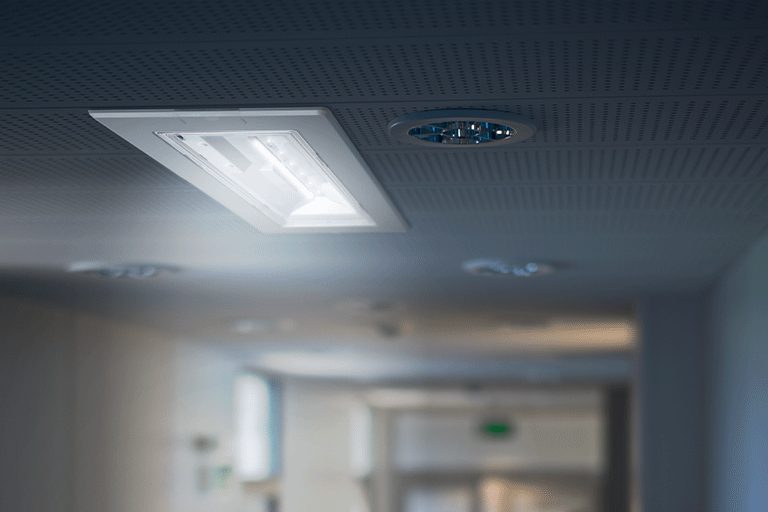
Having a dependable and properly maintained emergency lighting system may be life-saving in the event of sudden power losses, fires, or other dire scenarios. Having emergency lighting installed is not only something that many buildings are legally obligated to do, but it is also an important safety feature that helps people stay safe and allows them to evacuate safely in case of an emergency. Every conscientious building owner or manager should have emergency lights installed, and we’ll go over all the reasons why in this detailed essay.
Ensuring the safety of building inhabitants during crises is the primary and most crucial reason to have an emergency lighting installation. It also helps with evacuations. Sudden darkness, whether from a fire or a power outage, may make an already confusing and hazardous situation much worse. Installing emergency lighting reduces the likelihood of injury, panic, and accidents by providing dependable, immediate illumination that directs people to safe departure routes.
Illuminated exit signs and path-marking luminaires, among other strategically positioned emergency lighting fixtures, show the way to the closest exits. People who aren’t familiar with the building’s layout, including new hires or tourists, can greatly benefit from this visual aid. Reducing evacuation delays and increasing the likelihood of a successful evacuation, emergency lighting installation creates a clear and well-lit path to safety.
An further strong argument in favour of installing emergency lights is the need to meet legal and regulatory standards. Commercial, industrial and multi-occupancy residential buildings are required by most jurisdictions’ building standards and fire safety laws to include emergency lights. The emergency lighting performance criteria, including minimum specifications for illumination levels, length of operation, and maintenance, are outlined in these rules.
Building owners and managers face serious fines and legal ramifications for noncompliance with these rules. Significant legal ramifications may befall those responsible in the case of an emergency if injuries or fatalities are caused by the lack of or malfunctioning emergency lights. Consequently, it is a prudent business move to invest in a compliant and well-maintained emergency lighting installation to reduce legal risks and ensure safety.
Constant Uptime for Mission-Critical Systems: This is a top priority in some establishments including healthcare institutions, data centres, and manufacturing plants. In the event of a power loss, these institutions often contain backup power systems, such generators, to keep vital processes running. But even with backup power, there’s always a little lag time before these systems activate. To keep key processes running safely and uninterrupted throughout this time of change, emergency lighting installation is a must.
Installation of emergency lighting in healthcare institutions guarantees that life-saving treatments and care may continue uninterrupted. Technicians are able to securely traverse and oversee server rooms in data centres thanks to emergency illumination, which helps to avoid data loss or system breakdowns. To reduce the likelihood of accidents and production losses, emergency lighting is essential in industrial operations for securely evacuating staff and turning off machinery.
Installing emergency lighting is also important for protecting property and assets in the event of an emergency. Without enough light, people are more likely to inadvertently cause damage or vandalism during a power outage or fire. Because thieves find well-lit places less appealing, emergency lighting serves as a barrier against opportunistic stealing or malevolent conduct.
In addition, firemen and other emergency personnel may use emergency illumination to better locate and put out fires, which in turn reduces property damage. Responders are better able to do their jobs and stop the fire from spreading to neighbouring regions when emergency lighting illuminates the affected areas, even under conditions when smoke and debris are present.
Having a dependable emergency lighting arrangement in a facility gives people psychological comfort and reassurance. An abrupt blackout in the middle of a crisis may be very disorienting and terrifying. When activated, emergency lights may give a feeling of direction and visibility, which can assist ease anxiety and fear.
In addition to facilitating a safe and orderly evacuation, the installation of emergency lights can help alleviate anxiety. People are more likely to keep their cool and follow evacuation protocols when they can see what’s going on around them and how to get to safety. This psychological advantage might greatly lessen the likelihood of harmful crowd behaviours like stampedes and trampling that can happen during poorly organised evacuations.
Testing and maintenance should be performed on a regular basis to guarantee that an emergency lighting installation is both reliable and functional. In keeping with manufacturer recommendations and local ordinances, building managers and owners should set up a thorough testing and maintenance programme. It is standard practice to check the emergency lighting fixtures’ functionality once a month and their duration once a year to make sure they can keep the lights on for the necessary amount of time.
To keep the emergency lighting system in the best possible condition, it is recommended to do routine maintenance such as checking the wiring, cleaning the lenses, and replacing the batteries. The emergency lighting system may be guaranteed to work properly in times of crisis if building owners take the initiative to detect and repair any problems before they happen.
The installation of emergency lights may be easily connected with other building safety systems, making the facility more prepared for any disaster. For instance, the fire alarm system and emergency lighting can be interconnected so that the lights turn on immediately in the event of a fire. Regardless of whether the fire has caused a power outage or not, this integration guarantees that residents have rapid access to light to help them evacuate.
Also, places where smoke is being evacuated or pressurised can be illuminated with emergency lighting that is integrated with smoke control equipment. During smoke control operations, this helps keep people and firemen safe by maintaining visibility.
The ever-increasing benefits of investing in emergency lighting installations are bolstered by the fact that emergency lighting technology is always evolving. LED emergency lights outperform incandescent and fluorescent bulbs in terms of energy efficiency, longevity, and light quality. Reduced maintenance costs and increased dependability are the long-term results of these benefits.
With the ability to self-diagnose and test, intelligent emergency lighting systems can keep tabs on the installation’s health and notify building management of any problems or maintenance requirements. This preventative measure keeps the emergency lighting system in top shape, lowering the probability of failure in high-pressure scenarios.
In sum,
It is crucial to have emergency lights installed. It is an essential precaution to take in order to save life, property, and investments in the event of unforeseen disasters. The installation of emergency lighting has many and far-reaching benefits, including ensuring safe evacuation, preserving key operations, offering psychological comfort, and ensuring legal compliance.
The health and safety of the people living or working in our buildings should be our first concern as accountable building owners and managers. Purchasing an emergency lighting system that is dependable, regularly serviced, and in accordance with regulations shows how seriously we take this responsibility. We can make buildings that are safer, more robust, and ready to handle any disaster by embracing testing, maintenance, and advances in emergency lighting systems on a regular basis.
Installing emergency lighting is like a lighthouse; it keeps us safe in a world where disasters can happen at any second, leading us out of the shadows and into the future. In the face of any danger, let us accept this necessary precaution and make sure our structures can light the way to safety.