
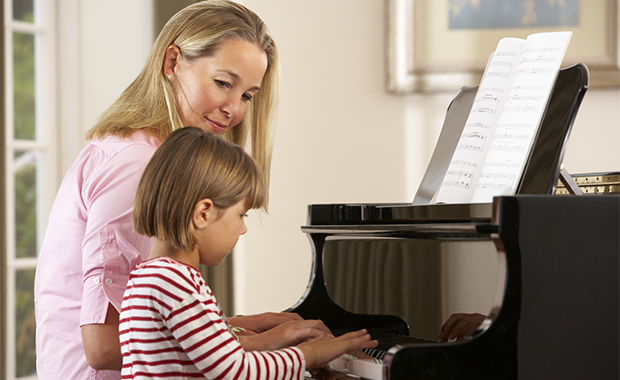
The many advantages of music instruction have led to a dramatic increase in the number of youngsters enrolled in piano lessons in recent years. The many advantages of the piano over other stringed instruments, such as the violin, cello, or flute, including its accessibility, affordability, and variety, ensure that it continues to be a beloved instrument among students of all ages. This essay takes a look at the reasons why piano lessons are becoming increasingly popular for kids, focusing on how they may help with things like self-esteem, creativity, intellect, and academic success.
Development on a Personal Level
Piano lessons for children are becoming increasingly popular due, in part, to the positive impact they have on students’ development as individuals. The virtues of responsibility, self-control, and commitment are fostered via the process of learning a new skill, which demands perseverance, patience, discipline, and devotion. Students’ self-esteem and confidence grow as they complete lessons and feel proud of their accomplishments. In addition, the act of playing an instrument encourages children to think creatively and imaginatively, which in turn encourages them to test out different ideas, sounds, and perspectives. Instilling these values in children at a young age equips them with valuable abilities that will benefit them throughout their lives, not only in the realm of music.
Success in the Classroom
The correlation between piano lessons and better academic achievement is another reason why more and more parents are opting to enrol their children in these programmes. By honing core cognitive capabilities like auditory processing, spatial reasoning, and memory recall, studies show that musical education helps youngsters improve their language, arithmetic, and reading skills. Research published in the Journal of Educational Psychology found that students’ ability to solve mathematical problems improved significantly when they participated in instrumental music lessons compared to those who did not. Another study came to a similar conclusion, finding that phonological awareness and decoding exams yielded substantially better results for youngsters who had learnt to read music than for non-musicians. Piano lessons for kids provide a well-rounded education that supplements conventional classroom instruction by encouraging students to achieve academically.
Progress in Cognitive Areas
Piano lessons have far-reaching cognitive advantages for children that go beyond just improving their academic performance. These benefits cover a wider range of cognitive abilities, including attention, memory, executive functioning, and decision making. Neuronal pathways in the basal ganglia and cerebellar areas, which are in charge of motor regulation and sequencing, are activated when one plays the piano, due to the sophisticated hand-eye and foot-hand motions that are required. In addition, the ability to memorise and recall extensive lists of musical notation, including chord progressions, bass lines, tempos, and dynamics, calls for working memory capabilities that enhance mental agility and adaptability. Finally, pianists need to be able to think on their feet and make split-second judgements regarding tempo, phrase, articulation, and interpretation, all of which need high executive functioning skills that are applicable in the real world.
Psychological Competence
Learning to play the piano has many positive effects on children’s mental and emotional development, including improved empathy, compassion, and resilience, in addition to the obvious academic and cognitive advantages. Individuals with disabilities or special needs can benefit from music therapy programmes by learning to better manage their emotions, reducing anxiety and tension, and increasing opportunities for social contact via the healing power of music. Similarly, children learn resilience and positive coping mechanisms via repeated practice sessions that lead them to difficult situations where they face failure, mistakes, and setbacks. Children develop more competence in regulating their emotions, resolving disputes, and interacting well with others as they work to increase their emotional intelligence.
Creative Self-Portrait
Last but not least, taking piano lessons may help kids develop their creative muscles and encourage them to let their imaginations run wild. Aspiring musicians have a unique opportunity to express themselves via music by composing original pieces that mirror their own tastes and personalities. The practice of improvising allows students to be more open-minded and unpredictable, which in turn helps them come up with new ideas and insights more quickly. Students are encouraged to express themselves creatively, share what they’ve learned, and motivate others via musical performance. So, taking piano lessons gives kids the chance to express themselves, learn new things, and develop their creative abilities to their fullest.
In summary
The benefits of piano lessons for children extend well beyond the classroom and into the realms of self-improvement, academic success, emotional maturity, cognitive growth, and creative expression, among many other areas of human development. Worldwide, families are flocking to enrol their children in piano lessons in the hopes of helping them reach their greatest potential and providing them with skills that will serve them well throughout their lives. This trend is certain to accelerate as more and more educators see the many benefits of music education. As a society, we should prioritise music education programmes that provide equitable opportunities to children of all socioeconomic backgrounds, races, genders, and abilities.