

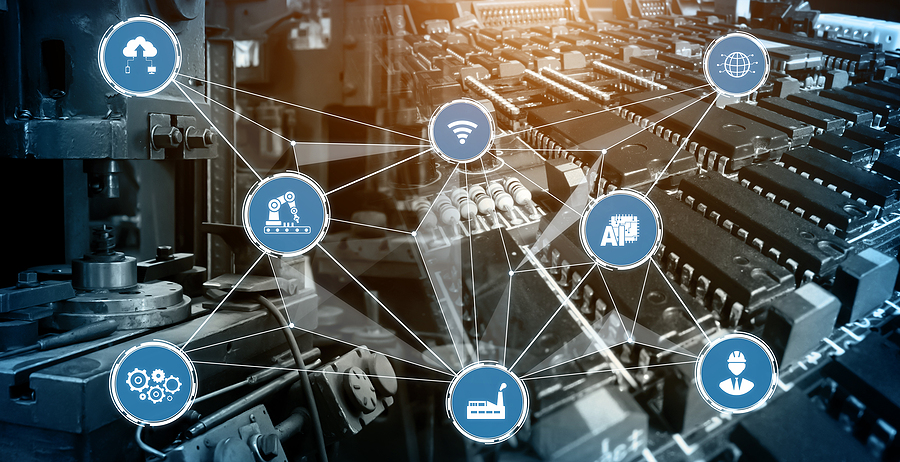
Manufacturing companies have until unheard-of difficulties keeping operational efficiency in the very competitive global market of today while satisfying growing customer needs for quality, customising, and fast delivery. Robust manufacturing systems and Enterprise Resource Planning (ERP) solutions have become more important tools for companies trying to simplify processes, lower expenses, and acquire competitive edge. Modern manufacturing companies are built on these integrated technology systems, which link several departments and processes into a cohesive operational ecosystem. The convincing arguments presented in this paper for manufacturing companies to give the deployment of ERP solutions top priority in order to propel operational excellence and sustainable development.
Operational Excellence Using Integrated Manufacturing Systems
Implementing manufacturing systems is mostly motivated by its amazing ability to improve operational efficiency all through the production process. Information silos, in which important data stays locked within separate departments or processes, abound in traditional production settings. By building a consistent information architecture that allows flawless communication between every level of manufacturing, advanced manufacturing systems remove these obstacles. Real-time operational visibility made possible by this integration lets managers spot problems, allocate resources most effectively, and make data-driven decisions with hitherto unheard-of speed and accuracy.
Through many channels—including automated data collecting, process standardising, and intelligent resource scheduling—manufacturing systems boost efficiency. These systems greatly lower administrative costs by removing paper-based record-keeping and manual data entry, therefore lowering the possible human mistake risk. Enforcing manufacturing systems’ standardising of procedures guarantees consistent quality and operational discipline all around industrial activities. Concurrent with this, advanced scheduling systems maximise the use of resources, tools, and machinery, therefore optimising productive capacity while reducing waste and idle time.
Measurable financial advantages follow directly from the efficiency increases attained via production processes. Improved profit margins come from fewer inventory carrying costs, less material waste, less labour costs, and shorter manufacturing cycles. More crucially, these efficiency gains help firms to meet rising production volumes without commensurate increases in operational expenses, therefore enabling economies of scale that improve competitiveness even more. Maintaining operational control and efficiency depends increasingly on the organisational discipline offered by strong production systems as manufacturing environments get more complex with more product diversity and customising needs.
Improved compliance and quality management
Another very convincing argument for using thorough manufacturing systems is quality control. Manufacturing systems offer the infrastructure required to apply strict quality control processes all through the production process in sectors where accuracy, consistency, and dependability rule most importantly. These systems let quality-related data be gathered and analysed at every manufacturing level, therefore enabling early identification of deviations and quick corrective action before faulty goods get to consumers.
Sophisticated Statistical Process Control (SPC) features included in modern production systems track important quality criteria against set standards constantly. The system automatically warns relevant people when processes start to veer towards unsatisfactory performance levels, therefore allowing proactive intervention before quality problems start. While improving customer satisfaction and brand reputation, this proactive approach to quality control greatly lowers the expenses related with scrap, rework, warranty claims, and returns.
Beyond internal quality criteria, manufacturing processes are absolutely vital for regulatory compliance in many different sectors. From food and pharmaceutical manufacturing to automotive and aerospace manufacturing, regulatory needs keep getting more and more complicated. Manufacturing systems offer the records, traceability, and process controls required to show regulatory compliance. These systems’ automatic record-keeping features produce thorough audit trails that support compliance claims made during regulatory inspections, therefore lowering compliance risks and related penalties.
Inventory Optimising and Supply Chain Integration
Another important advantage of application is the extending of production systems outside of factories to include supplier and customer networks. Perfect integration with supplier systems made possible by modern production systems helps to provide automated procurement systems, real-time inventory visibility, and cooperative planning. This integration lessens the administrative load related to supplier management and streamlines material movement into production sites.
Among the largest financial gains from sophisticated manufacturing systems are inventory optimisation. These systems permit exact control over raw materials, work-in-progress, and finished goods inventories by giving accurate, real-time view of inventory levels across all storage sites. Just-in-time procurement that reduces carrying costs and avoids stockouts is made possible by sophisticated demand forecasting systems included into manufacturing systems, which remarkably accurately estimate future material requirements. While lowering warehouse space needs and inventory management costs, the resultant inventory reductions liberate working money for additional strategic investments.
Through better demand sensing capabilities, manufacturing systems also allow more agile and responsive supply chain operations. These systems let manufacturing companies to predict demand and modify production plans by gathering and evaluating consumer order patterns, market trends, and outside economic factors. This demand-driven manufacturing method guarantees availability of high-demand commodities and lowers the possibility of creating undesired inventory, hence improving customer happiness and market response.
Data-Driven Decisions and Ongoing Enhancement
The enormous volumes of operational data produced by manufacturing systems present hitherto unheard-of analytical and insight opportunities. Advanced analytics features of modern manufacturing systems convert unprocessed operational data into useful intelligence. These analytical techniques help factory executives find improvement prospects concealed in conventional contexts, correlate variables, and spot trends. From strategic planning to everyday operational changes, the resultant insights guide more informed decision-making at every level of an organisation.
Manufacturing systems create the measuring framework required to monitor performance and measure advancement, thereby supporting efforts at ongoing development. Through user-friendly dashboards, key performance metrics on productivity, quality, cost, and delivery are automatically computed and shown, therefore offering insight into areas for development and the results of enhancement projects. By means of this data-driven strategy to ongoing development, resources are focused on the most impactful prospects, therefore optimising return on investment.
Manufacturing systems’ analytical capacity covers more general business performance indicators than only operational measures. These technologies give before unheard-of access to product costs, profit margins, and capital efficiency by combining manufacturing data with financial information. More accurate profitability analysis at the product, customer, and market levels made possible by this financial transparency helps to guide strategic decisions about product mix, pricing policies, and market concentration. The resultant alignment of operational capabilities with market prospects maximises general corporate performance and competitiveness.
Future Development: Scalability and Adaptability
Strong manufacturing systems build a technological basis that supports corporate development and market adaption by means of which they enable Designed to scale effectively to meet rising production volumes, new product releases, and geographical growth, well-designed manufacturing systems This scalability removes the operational restrictions that may limit development in less developed manufacturing environments, therefore allowing companies to seize market possibilities free from operational complexity or capacity constraints.
Furthermore offering the flexibility required to fit changing consumer needs and market trends are modern manufacturing methods. Smaller batch sizes, faster delivery, and more customising are just a few of the consumer expectations that manufacturing systems help to satisfy profitably by means of operational agility. These systems’ advanced production scheduling features help to minimise changeover times by optimising setup processes, therefore enabling smaller production runs to be profitable. Mass customising is made possible without matching increases in administrative overhead by configurator tools linked with manufacturing systems streamlining the conversion of custom specifications into production instructions.
Modern manufacturing systems’ future-proof character offers still another interesting application justification. Leading systems include modular designs that help to combine developing technologies including artificial intelligence, machine learning, Internet of Things (IoT) connections, and advanced robotics. Maintaining their competitive advantage in a manufacturing environment going more digital, this technical extensibility guarantees that manufacturing companies may constantly improve their operational capabilities as new technologies mature. The resulting technology basis helps industrial companies to take advantage of Industry 4.0 possibilities without disruptive system changes.
Knowledge Management and Worker Empowerment
Although the technical features of industrial systems get a lot of attention, their influence on worker efficiency should also be given equal thought. Well-executed manufacturing systems change the employee experience by offering simple interfaces that streamline difficult operations and show pertinent data right at the point of use. This contextual information distribution helps workers at all levels to make faster better decisions, hence improving job satisfaction and productivity. The staff empowerment that results produces a more involved and efficient company competent of providing outstanding operational performance and customer service.
Manufacturing systems also help many manufacturing companies with important knowledge management issues. Maintaining institutional knowledge becomes more critical as seasoned employees are ready for retirement. Manufacturing systems gather and codify this important knowledge within business rules, process requirements, and standardised workflows. This methodical knowledge retention guarantees operational continuity even with changes in personnel count and speeds new employee development. The ensuing information democratisation helps to build a more robust company less dependent on individual skills, therefore lowering the operational risks connected with personnel changes.
Ultimately, for manufacturing companies looking for sustained competitive advantage, the application of ERP solutions and thorough production systems becomes strategically necessary. From operational efficiency and quality improvement to supply chain optimisation and workforce empowerment, these combined technical systems provide transforming advantages in many different spheres. The organisational capabilities offered by strong manufacturing systems become crucial for survival and success as industrial settings get more complicated and competitive pressures get stronger. Forward-looking manufacturers understand this technical need and give production systems top priority in their operational plan.