

Professional tree surgeons provide a wide range of practical services that help homeowners, landowners, businesses and public bodies manage trees safely and responsibly. Across Cheshire and North Wales, where mature gardens, rural boundaries, historic properties and exposed weather conditions are common, tree work often requires more than basic cutting. A qualified tree surgeon Wrexham or tree surgeon Chester can assess a tree’s condition, identify risks, recommend appropriate work and carry out the job using specialist equipment and safe working practices.
Tree surgery is not simply about removing branches. It combines arboricultural knowledge, climbing ability, rigging skills, machinery operation and an understanding of how trees respond to pruning and removal. The aim is usually to protect people and property while preserving healthy trees wherever possible. Typical services include professional tree surgery, tree removals, crown reductions, tree pruning and specialist sectional dismantling.
Professional Tree Surgery
Professional tree surgery covers the assessment, maintenance and management of trees in domestic, commercial and public settings. A tree surgeon begins by inspecting the tree’s species, size, structure, health, location and surroundings. This assessment helps determine whether the tree needs pruning, monitoring, treatment, reduction or removal.
A tree surgeon Wrexham will often deal with trees affected by wind exposure, heavy growth, storm damage or proximity to homes, driveways, footpaths and farmland. A tree surgeon Chester may work in more confined urban and suburban settings, where trees sit close to walls, gardens, roads, overhead cables and neighbouring properties. In both areas, the underlying priority is the same: to manage risk while maintaining the health and appearance of the tree.
Professional tree surgery can include removing dead or dying branches, improving the tree’s structure, reducing excessive weight, clearing branches from buildings and managing trees after storm damage. It may also involve advice on Tree Preservation Orders, conservation areas and protected species, because tree work is not always straightforward from a legal perspective. A reputable tree surgeon will explain what work is needed, why it is needed and how it will be carried out before starting.
Tree Removals
Tree removal becomes necessary when a tree is dead, dying, dangerously unstable, severely diseased or causing unavoidable obstruction. Sometimes a tree may also need removing because it has outgrown its location, is damaging structures or is preventing a planned development. A professional tree surgeon will usually consider alternatives first, such as pruning, crown reduction or monitoring, before recommending complete removal.
Tree removal is a high-risk operation, particularly when the tree is large, leaning, decayed or close to buildings. The tree surgeon must plan the direction of fall, assess obstacles, establish exclusion zones and use appropriate cutting techniques. Where there is enough open space, a tree may be felled in one controlled movement. In tighter locations, removal is carried out section by section to avoid damage.
A tree surgeon Chester working in a compact residential garden may need to remove branches over a roof, fence or conservatory, while a tree surgeon Wrexham may be dealing with a large tree near a rural boundary, outbuilding or access road. In either case, removal requires planning, protective equipment and controlled lowering techniques. Once the tree has been removed, many contractors also offer stump grinding or stump removal to leave the area ready for replanting, landscaping or construction.
Crown Reductions
A crown reduction reduces the overall height and spread of a tree’s canopy while aiming to retain its natural shape. It is commonly requested when a tree has become too large for its surroundings, is blocking light, is growing towards a building or is placing excessive weight on weak branches. The objective is not simply to cut the tree back hard, but to reduce its size in a way that supports long-term health and stability.
Crown reductions are often used where branches are approaching roofs, windows, power lines, garden boundaries or public highways. Reducing the crown can lower the risk of storm damage by decreasing wind resistance and removing excess end weight from long limbs. It can also allow more daylight into a garden or property without necessarily removing the tree altogether.
A skilled tree surgeon Wrexham will assess the species before reducing a crown, because different trees respond differently to pruning. Some tolerate reduction well, while others may be more vulnerable to decay, stress or vigorous regrowth. Similarly, a tree surgeon Chester must consider the tree’s location and the desired outcome, balancing safety, appearance and future growth. A poorly executed reduction can leave a tree unsightly, unstable or prone to decay, which is why professional technique matters.
Tree Pruning
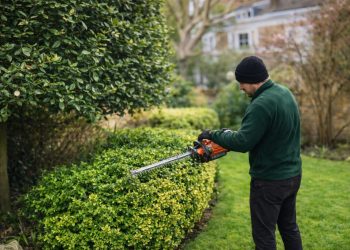
Tree pruning is one of the most common tree surgery services and covers several different types of work. It may involve removing deadwood, crossing branches, damaged limbs, diseased growth or branches that are obstructing access, light or views. Pruning can improve a tree’s appearance, reduce hazards and encourage a stronger, more balanced structure.
Crown thinning removes selected branches throughout the canopy to allow more light and air to pass through the tree. This can reduce wind loading and lessen the strain on heavy limbs. Crown lifting, sometimes called crown raising, removes lower branches to create clearance above paths, driveways, vehicles, buildings or pedestrian areas.
Formative pruning is used on younger trees to establish a healthy structure as they mature. Deadwooding removes dead, dying or diseased branches that could fall and cause injury or damage. A tree surgeon Chester may carry out regular pruning on trees in established gardens, while a tree surgeon Wrexham may be asked to manage overgrown trees on rural properties, farms or larger plots. In every case, pruning should be carried out with a clear purpose and in accordance with good arboricultural practice.
Specialist Sectional Dismantling
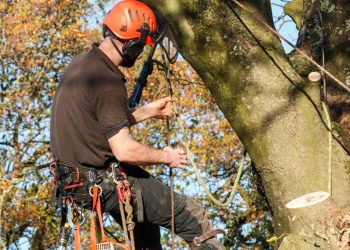
Specialist sectional dismantling is used when a tree cannot be felled safely in one piece. This is often the case in confined gardens, courtyards, commercial sites and locations close to homes, greenhouses, fences, roads, power lines or other structures. Rather than cutting the tree at the base and allowing it to fall, the surgeon removes it carefully in manageable sections from the top downwards.
The process usually begins with a detailed risk assessment. The tree surgeon identifies hazards, plans access routes and decides how each section will be cut, lowered and removed. Climbing equipment, harnesses, ropes, pulleys and rigging systems are used to control the movement of heavy branches and trunk sections. In some cases, a mobile elevated work platform may be used where climbing is not appropriate.
Sectional dismantling is particularly valuable in built-up areas. A tree surgeon Chester may use this method to remove a mature tree beside a terrace, wall or driveway without causing damage to surrounding property. A tree surgeon Wrexham may use the same technique for a large tree in a restricted rural garden or near an outbuilding. The method allows precise control, reduces the risk of uncontrolled falls and makes it possible to remove trees from locations that would otherwise be unsafe.
Why Professional Expertise Matters
Tree work can appear straightforward from ground level, but it involves serious risks. Working at height, using chainsaws, handling heavy timber and operating near buildings or power lines all demand training, experience and appropriate insurance. Professional tree surgeons use personal protective equipment, follow safe systems of work and understand how to manage unexpected movement, decay or unstable branches.
Local knowledge is also valuable. Cheshire and North Wales experience varied conditions, from exposed upland locations around Wrexham to sheltered residential areas around Chester. Soil type, wind exposure, tree species and nearby structures all influence how a tree should be managed. A tree surgeon Wrexham familiar with rural and semi-rural settings may approach a job differently from a tree surgeon Chester working in a tighter urban environment, but both must apply the same core safety principles.
Professional tree surgeons also understand the importance of leaving a tree in a healthy condition after work is completed. Over-pruning, topping or careless removal of limbs can harm a tree and create future problems. Good tree surgery aims to achieve the client’s practical goal while respecting the biology and natural form of the tree.
Choosing the Right Tree Surgeon
When choosing a tree surgeon in Cheshire or North Wales, homeowners should look for relevant qualifications, insurance, experience and a clear written quotation. It is sensible to ask how the work will be carried out, whether waste will be removed and whether any permissions are required. For larger or more hazardous jobs, a professional should be able to explain the method, equipment and safety measures in plain language.
Whether someone needs routine pruning, a crown reduction, a full tree removal or specialist sectional dismantling, the right tree surgeon will prioritise safety, tree health and property protection. From a small garden tree to a large, complex removal, professional tree surgery provides a structured and responsible way to manage trees across Wrexham, Chester and the wider Cheshire and North Wales region.
Get in Touch:
JD Tree Services Wrexham – Arborist and Tree Surgeons
Unit 1 D, Alyn Industrial Estate, Cefn-y-bedd, Gwersyllt, Wrexham LL12 9YG, United Kingdom
01978 467024
tree-surgeons-wrexham.co.uk
JD Tree Services Chester – Arborist and Tree Surgeons
West Business Park, Chantry Court, Sovereign Way, Chester CH1 4QN, United Kingdom
01244 455863
tree-surgeons-chester.co.uk