

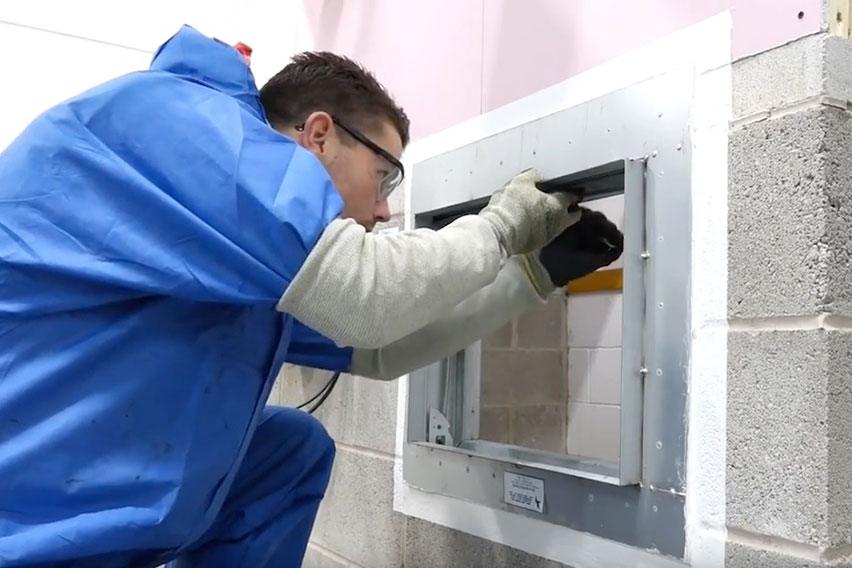
Fire damper testing is a critical aspect of building maintenance and safety that often goes unnoticed by the general public. However, for facility managers, building owners, and safety professionals, it’s an essential process that can mean the difference between life and death in the event of a fire. This article delves into the importance of fire damper testing, the procedures involved, and why regular testing is crucial for maintaining building safety and compliance with regulations.
Fire dampers are passive fire protection devices installed in heating, ventilation, and air conditioning (HVAC) systems. Their primary function is to prevent the spread of fire and smoke through ductwork in a building. When a fire occurs, these dampers automatically close, creating a barrier that contains the fire and smoke within a specific area, thus buying precious time for occupants to evacuate and for firefighters to respond.
The importance of fire damper testing cannot be overstated. Over time, fire dampers can become compromised due to various factors such as dust accumulation, corrosion, or mechanical failure. Regular fire damper testing ensures that these crucial safety devices are functioning correctly and are ready to perform when needed most. Without proper testing, a malfunctioning fire damper could lead to the rapid spread of fire and smoke throughout a building, potentially resulting in catastrophic consequences.
Fire damper testing is not just a good practice; it’s often a legal requirement. Many jurisdictions mandate regular fire damper testing as part of their building safety codes. The frequency of required testing can vary, but it’s common for fire damper testing to be conducted every four years for most buildings, and every six years for hospitals. However, some localities may require more frequent testing, especially for high-risk facilities or those with a history of fire safety issues.
The process of fire damper testing involves several steps, each crucial to ensuring the damper’s functionality. Typically, fire damper testing begins with a visual inspection. Technicians will examine the damper for any signs of damage, corrosion, or obstructions that could impede its operation. This visual check is essential, as it can reveal issues that might not be apparent during operational testing.
Following the visual inspection, the next step in fire damper testing is the operational test. This involves manually triggering the damper to close and then reopening it. The technician will check that the damper closes fully and smoothly, creating an effective seal. They will also ensure that the damper reopens properly, as a stuck-closed damper can disrupt airflow in the HVAC system during normal operation.
During fire damper testing, technicians also inspect the fusible link, a critical component that triggers the damper to close when exposed to high temperatures. The fusible link is designed to melt at a specific temperature, usually around 165°F (74°C), causing the damper to snap shut. Inspecting this link is crucial, as a faulty or degraded fusible link could prevent the damper from closing during a fire.
Another important aspect of fire damper testing is checking the accessibility of the damper. Fire dampers need to be easily accessible for maintenance and emergency situations. During testing, technicians will ensure that access panels are properly labeled and unobstructed, allowing for quick identification and access if needed.
Documentation is a crucial part of the fire damper testing process. Detailed records must be kept of each test, including the date of inspection, the condition of the damper, any issues found, and any repairs or replacements made. This documentation is not only important for regulatory compliance but also provides a valuable history of the damper’s performance over time, helping to identify patterns or recurring issues that may need addressing.
When issues are discovered during fire damper testing, immediate action is necessary. Depending on the problem, this could range from simple cleaning and lubrication to complete replacement of the damper. Any repairs or replacements must be carried out by qualified professionals to ensure the damper meets all relevant safety standards and building codes.
Fire damper testing is not just about checking individual dampers; it’s part of a comprehensive fire safety strategy. The results of fire damper testing can inform broader fire safety assessments and help identify areas where improvements might be needed in a building’s overall fire protection system.
One of the challenges in fire damper testing is the sheer number of dampers that may be present in a large building. A high-rise office building or a hospital, for instance, might have hundreds or even thousands of fire dampers. This makes the testing process time-consuming and potentially disruptive to building operations. However, the importance of thorough fire damper testing means that this process cannot be rushed or abbreviated.
Advancements in technology are beginning to impact the field of fire damper testing. Some newer damper models now incorporate self-testing features or remote monitoring capabilities. While these innovations can streamline the testing process and provide more frequent status updates, they do not entirely replace the need for hands-on inspection and testing by qualified professionals.
Training and certification for fire damper testing professionals is another crucial aspect of ensuring the effectiveness of these safety devices. Technicians performing fire damper testing should be well-versed in the latest testing procedures, familiar with different types of dampers, and knowledgeable about relevant building codes and standards. Ongoing education and certification programs help ensure that these professionals stay up-to-date with evolving technologies and regulations in the field of fire safety.
The cost of fire damper testing can be significant, especially for large buildings with numerous dampers. However, when weighed against the potential costs of fire damage or, more importantly, the loss of life that could result from malfunctioning fire dampers, the expense of regular testing is clearly justified. Moreover, proactive fire damper testing can often identify minor issues before they become major problems, potentially saving money on repairs or replacements in the long run.
It’s worth noting that fire damper testing is just one component of a comprehensive fire safety program. Other elements, such as sprinkler system inspections, fire alarm testing, and regular fire drills, all work together to create a safe environment. Fire damper testing should be coordinated with these other safety measures to ensure a holistic approach to fire protection.
Public awareness of fire damper testing is generally low, as this crucial safety measure often happens behind the scenes. However, building occupants should be aware of the importance of these devices and the testing process. This awareness can foster a culture of safety and encourage occupants to report any issues they might notice, such as unusual noises from vents or visible damage to access panels.
In conclusion, fire damper testing is a vital process that plays a crucial role in building safety. Regular, thorough testing ensures that these critical devices are ready to perform their life-saving function in the event of a fire. While the process of fire damper testing may be invisible to most building occupants, its importance cannot be overstated. For building owners, facility managers, and safety professionals, prioritizing fire damper testing is not just a matter of regulatory compliance – it’s a fundamental responsibility in protecting lives and property. As building designs evolve and new technologies emerge, the field of fire damper testing will undoubtedly continue to adapt and improve, always with the goal of enhancing fire safety and saving lives.