

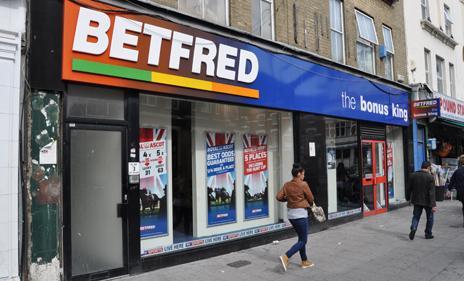
Every year , approximately three quarters of the adult population of the UK plays some form of gambling. While the majority of people are able to afford lottery tickets and scratch cards fixed odds bookmakers are a popular and well-known element of the culture of gambling throughout the UK.
Via both high street betting shops and online betting and bookmakers, the top bookmakers of the UK accept and process billions in sports bets every year. They also play a key part in sponsoring a variety of sports events, including horse racing and football, as well as their brand names are featured at the top sporting venues.
The world’s leading bookmakers include:
Bet365
William Hill
Paddy Power
Boylesport
How do bookmakers work
At its most basic level bookmakers permit you to bet on the outcomes of sports events. They assign a “price” or odds, for every possible outcome of an event. The odds are determined by probability calculations. Betting on bookmakers is hoping to make money by correctly predicting outcomes of events. Bookmakers, however, adjust their odds to gain a total profits from events regardless of what its outcomes are.
The measurement of probability
To succeed, bookmakers need to predict the probability of different outcomes as accurately as is possible. This task is performed by bookmaker employees referred to as traders. Traders uses complicated mathematical and statistical tools that take as many variables as they can into consideration to determine the probabilities of all possible outcomes of events. Examples of these variables are form the weather, injuries, home advantage.
But these calculations cannot forecast the future accurately. Trading firms may fail to be aware of certain factors. Furthermore, certain factors, such as weather or injury, may occur suddenly. It can dramatically alter the chance of a particular outcome when odds are already placed or bet on by punters. In many cases, bookmakers alter their odds prior to sporting events changing their odds whenever the value of variables changes.
Making a cut
Although predicting probabilities as accurately as it is possible for bookmakers to stay in business, it isn’t really how they earn profits. If bookmakers merely relied on probabilities to predict outcomes, statistics suggest that in the long term both bookmakers and customers who bet on them would end up breaking even. The bookmakers, however, reduce the odds for any event, usually by between 5% to 10 percent. Therefore, the odds offered by bookmakers may be slightly less than the actual probabilities that they’ve calculated to be specific outcomes.
The proportion at which odds are reduced is referred to as the overround, and this is an increase in the profits of the bookmaker margin.This implies that bookmakers pay lower than when they were paying out with the actual odds. It could be that a bookmaker gives an amount of $90 in winning bets for 100 bets on an event. The mathematics behind this can be quite complex.
Balanced books
Bookmakers try to make their odds as accurate as they can by taking the overround into account. They also trust that every bet placed on an event will balance across the different odds according to the law of probability. When bets are distributed across the odds of an event in such that each outcome could result in an overall loss to a bookmaker, this is described as a balanced book. The book that is balanced can be described as the most sought-after bookmaker because it assures a profitable bet market.
What makes odds different among bookmakers?
Visit this site when looking for bookies opening hours.
If you’ve bet on sports events before, you’ll have seen the different bookmakers offering different odds for the identical event. There are two reasons for why this occurs. The first is that the bookmakers could use different statistical tools in order to calculate their odds, and assign different weights to different variables that influence the odds, or interpret variables in a different way. Because measuring probability isn’t an exact science and the influence of variables isn’t always clear the bookmakers will all agree on the odds for an event.
The reason odds are different is that bookmakers compete with each other for business from the public. For example an online bookmaker who has higher odds on the favorite for a race than other bookmakers will get more bets for the race. Each bookmaker will offer their customers the “best value” on markets or races at times. In an effort to attract new customers and outdo each competitors, bookmakers may offer higher odds than those which are statistically plausible. However, their odds must become lower real odds the majority often if they’re trying to make an income.
A well-known alternative to bet on odds offered by bookmakers is using an exchange for betting, where players set odds.