
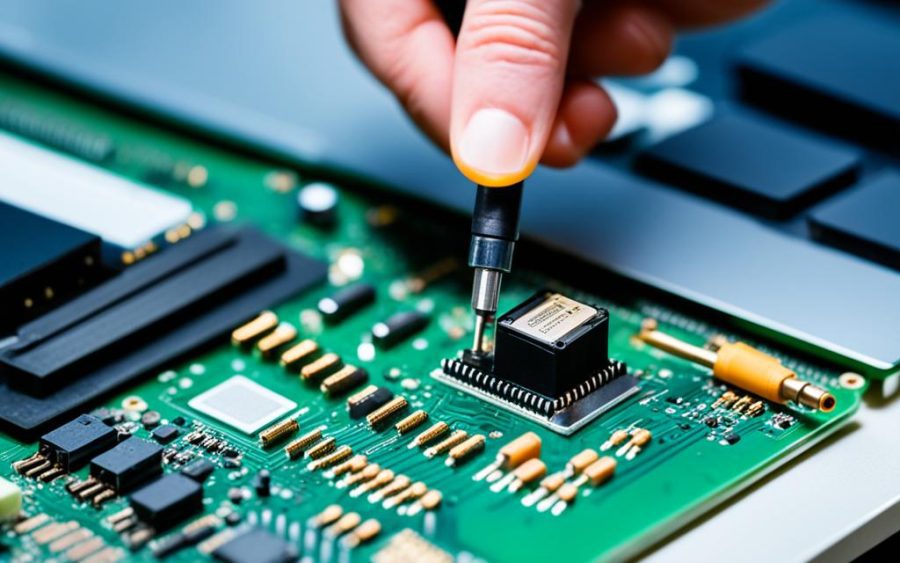
Soldering is a necessary skill for anyone involved in computer maintenance, custom PC construction, or electronic circuit design. At its core, soldering is the technique of attaching two or more metal components together using a filler metal known as solder. This approach is vital in providing dependable electrical connections on a motherboard, peripheral interface, or any internal component within a computer. Whether repairing a damaged USB port or installing new components, soldering is essential for assuring performance and durability.
Soldering is most commonly used in the context of computers to attach microelectronic components to printed circuit boards (PCBs). These boards provide the foundation of any computing system, containing sophisticated networks of connections that allow electrical impulses to flow between components. Soldering makes these connections secure, conductive, and resistant to the wear and tear that can occur with extensive use or environmental conditions.
Computer soldering demands a steady hand, a keen eye for detail, and some familiarity with circuit design. Unlike fundamental soldering activities seen in common DIY projects, soldering in the computer realm frequently requires working with incredibly small components. Integrated circuits, resistors, capacitors, and transistors all require precise soldering to avoid destroying sensitive components or causing short circuits, which could render the device useless.
Repairing broken solder joints is a typical application for soldering. Mechanical load, heat cycling, or manufacturing faults can all cause these joints to shatter over time. Solder junctions may corrode more quickly in laptops, where space is limited and temperatures are unpredictable. Skilled soldering can repair these connections, extending the device’s life without requiring the replacement of entire boards or systems.
Beyond repairs, soldering is required for custom modifications and hardware upgrades. Enthusiasts who construct their own PCs may elect to solder in non-standard components like as bespoke buttons, indicators, or integrated sensors. This type of bespoke modification necessitates a thorough understanding of where to solder, how much solder to use, and which temperature ranges are safe for the materials involved. Poor soldering can cause both failure and irreversible damage to pricey components.
Soldering computers isn’t just for typical desktop towers or laptops. It applies equally to embedded systems, single-board computers, and microcontroller-based systems. These systems are frequently used in robotics, automation, and specialised industrial computing applications. Soldering in such instances is typically even more accurate, necessitating the use of specialised instruments such as temperature-controlled soldering machines and fine-tipped soldering irons.
Temperature management is an essential component of successful soldering in computer applications. Too much heat can delaminate the PCB or harm the sensitive silicon in microchips, whereas insufficient heat can result in a cold solder connection that is brittle and conducts electricity poorly. Successful soldering necessitates not just the correct temperature, but also the correct technique, which often entails heating both the component lead and the pad before adding solder to guarantee a strong and conductive contact.
Surface-mount technology (SMT) is one area where soldering has received a lot of attention in recent years. Unlike through-hole components, which require leads to be routed through the PCB, SMT components are attached directly to the surface. These components are substantially smaller and necessitate even more accurate soldering procedures, often performed under a microscope. While machines handle much of the SMT soldering in mass manufacturing, physical soldering is still required for prototyping, repair, and bespoke design.
Reflow soldering is becoming increasingly popular among computer enthusiasts and experts. This technique entails putting solder paste to the board, inserting the components, and then heating the entire assembly in an oven or with a heat gun until the solder melts and produces suitable joints. Reflow soldering is commonly used in industry, but it is becoming more accessible to hobbyists thanks to cheaper equipment. It provides a more consistent soldering experience, particularly with multi-pin components such as processors and memory modules.
However, soldering is not without risk. Mistakes may be costly, especially when dealing with high-end computer gear. Solder bridges, in which extra solder links two places that should remain separate, can cause short circuits. Similarly, extensive rework or heat application might pull pads off the PCB, making future repairs difficult or impossible. This is why correct technique and a thorough understanding of circuit design are critical for effective soldering in computing applications.
Safety is another important factor. Soldering emits fumes, particularly from flux, a chemical used to clean and prepare surfaces for solder adherence. These fumes can be dangerous if inhaled over an extended period of time. Working in a well-ventilated location or with fume extraction equipment is recommended. Furthermore, handling a soldering iron poses a risk of burns, thus heat-resistant mats, tool supports, and eye protection should be normal precautions.
While soldering can be learnt quickly, mastering it—particularly for computer applications—requires time and expertise. Many pros recommend practising on scrap boards before attempting to repair or modify real hardware. This exercise improves muscle memory and hand-eye coordination, which are required to perform clean, exact solder joins. Watching expert technicians or instructional videos can also help you understand how to deal with frequent soldering issues.
The instruments required for computer soldering are diverse and specialised. Beyond the basic soldering iron, one may need solder wick to remove excess solder, flux pens to improve adherence, and magnifying lamps or digital microscopes for visibility. The type of solder is also important; lead-free solder is more ecologically benign, but it has a greater melting point and different flow properties than standard leaded solder. Each type has a unique learning curve and application scenarios.
Soldering is also strongly related to diagnosing computer issues. Technicians frequently utilise multimeters and continuity testers to detect damaged traces or bad connections, which can be repaired with careful soldering. In other circumstances, powerful diagnostic instruments such as oscilloscopes or thermal cameras are used to detect tiny defects that can be fixed by resoldering specific sections of a circuit board.
As schools and universities extend their scientific and engineering curricula, soldering education is becoming increasingly important. Many programs now offer hands-on soldering training as part of their computer hardware or electronics courses. This has helped to demystify soldering and make it more accessible to younger audiences who may go on to develop in the computing area.
To summarise, soldering remains an important skill in the realm of computing. Whether doing repairs, alterations, prototypes, or diagnostics, the ability to make dependable electrical connections is critical. While tools and techniques have evolved to include precision equipment and advanced procedures such as reflow or surface-mount soldering, the essential principles have not altered. Precision, patience, and practice are the foundations of successful soldering. For those willing to put in the time and effort, soldering opens up new opportunities for developing, maintaining, and enhancing the computers that form our digital world.