

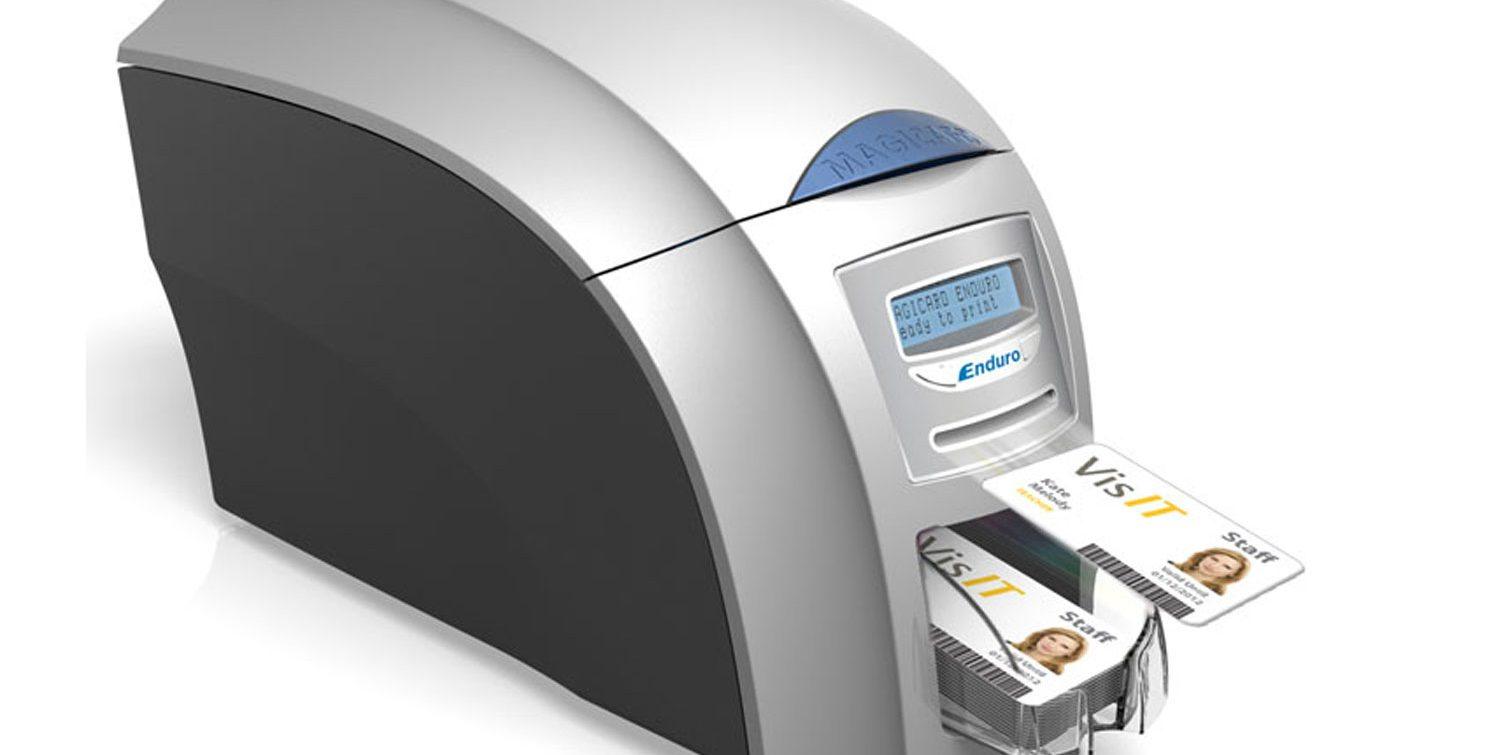
ID card printers have become an integral part of modern security and identity management systems, transforming the way organizations handle identification, access control, and personnel management. These sophisticated devices have evolved from simple plastic card printers to advanced, multi-functional machines capable of producing highly secure and durable identification cards. In this article, we will explore the world of ID card printers, their technology, applications, and the significant role they play in today’s security-conscious society.
The journey of ID card printers began several decades ago when the need for more secure and efficient identification systems became apparent. Early ID card printers were basic machines that could print text and simple graphics on plastic cards. However, as technology advanced and security requirements became more stringent, ID card printers evolved to meet these growing demands.
Modern ID card printers are complex devices that combine various printing technologies, encoding capabilities, and security features. These printers typically use either dye-sublimation or reverse transfer printing techniques to produce high-quality, full-color images on plastic cards. Dye-sublimation ID card printers work by heating a ribbon containing dye, which then sublimates and transfers onto the card surface. This process allows for smooth color gradients and photographic-quality images. Reverse transfer ID card printers, on the other hand, print the image onto a clear film, which is then fused onto the card surface. This method provides edge-to-edge printing and works well with non-PVC card materials.
One of the key advantages of contemporary ID card printers is their ability to incorporate various security features directly into the card during the printing process. These features can include holographic overlays, UV fluorescent inks, micro-text, and guilloche patterns. Such elements make it extremely difficult for cards to be counterfeited or tampered with, enhancing the overall security of the identification system.
Many ID card printers also come equipped with encoding capabilities, allowing them to write data to magnetic stripes, contact chips, or contactless RFID chips embedded within the cards. This functionality enables ID cards to serve multiple purposes, such as access control, time and attendance tracking, and cashless payment systems. The versatility of these multi-functional ID card printers has made them indispensable in various sectors, including corporate environments, educational institutions, healthcare facilities, and government agencies.
The education sector has been a significant adopter of ID card printers. Schools and universities use these devices to create student and staff ID cards that serve multiple purposes. These cards often function as library cards, meal plan cards, and building access cards, streamlining various campus operations. Advanced ID card printers allow educational institutions to produce cards with specific designs for different user groups, incorporate security features to prevent forgery, and encode relevant information directly onto the cards.
In the corporate world, ID card printers play a crucial role in enhancing security and improving employee management. Companies use these printers to create employee badges that not only serve as visual identification but also control access to different areas of the workplace. Many organizations integrate their ID card printing systems with HR databases, allowing for quick and accurate card production when new employees join or when existing employees require updated credentials. The ability of modern ID card printers to produce cards on-demand has significantly reduced wait times and improved operational efficiency in many businesses.
Government agencies and healthcare institutions have also embraced ID card printers as essential tools for identity management and security. Government-issued identification cards, such as driver’s licenses and national ID cards, often require the highest levels of security and durability. Advanced ID card printers capable of producing cards with multiple layers of security features are crucial in these applications. In healthcare settings, ID card printers are used to create staff badges and patient identification cards, helping to improve patient safety and streamline healthcare delivery.
The events and hospitality industry has found innovative uses for ID card printers as well. Conference organizers use these devices to produce attendee badges on-site, often incorporating variable data printing to customize each card with the attendee’s information, session access, and even sponsor advertisements. Hotels and resorts use ID card printers to create guest key cards that not only provide room access but can also be used for on-property purchases and amenity access.
As the demand for more secure and functional ID cards has grown, ID card printer manufacturers have responded with increasingly sophisticated models. Many modern ID card printers now offer dual-sided printing capabilities, allowing for the printing of additional information or security features on the back of the card. Some high-end ID card printers even incorporate lamination modules, which apply a protective overlay to the card, enhancing its durability and lifespan.
The software that drives ID card printers has also seen significant advancements. Today’s ID card design and printing software offers user-friendly interfaces that allow for easy card template creation, database integration, and batch printing. Many software solutions also include features for managing printer fleets, tracking supply levels, and monitoring printer health, making it easier for organizations to maintain their ID card printing systems.
Environmental concerns have not been overlooked in the evolution of ID card printers. Many manufacturers now offer eco-friendly options, such as printers that use biodegradable cards or energy-efficient printing processes. Some ID card printers are designed to use refillable ribbon cartridges, reducing waste and lowering the overall environmental impact of card production.
The future of ID card printers looks promising, with ongoing developments in printing technology and security features. Emerging trends include the integration of biometric data directly onto ID cards, the use of quantum dot technology for enhanced security printing, and the development of mobile-compatible ID cards that can be read by smartphones.
As identity theft and fraud continue to be significant concerns, the role of ID card printers in producing secure identification documents is more critical than ever. The ability of these devices to incorporate multiple layers of security features, combined with their capacity for on-demand production, makes them invaluable tools in the fight against identity-related crimes.
In conclusion, ID card printers have come a long way from their humble beginnings, evolving into sophisticated devices that play a crucial role in modern security and identity management systems. From educational institutions to government agencies, from corporate offices to healthcare facilities, ID card printers have found applications across a wide range of sectors. As technology continues to advance, we can expect ID card printers to become even more capable, secure, and integral to our daily lives. The future of identification and access control is being shaped by these remarkable machines, ensuring that our identities remain secure in an increasingly complex world.