

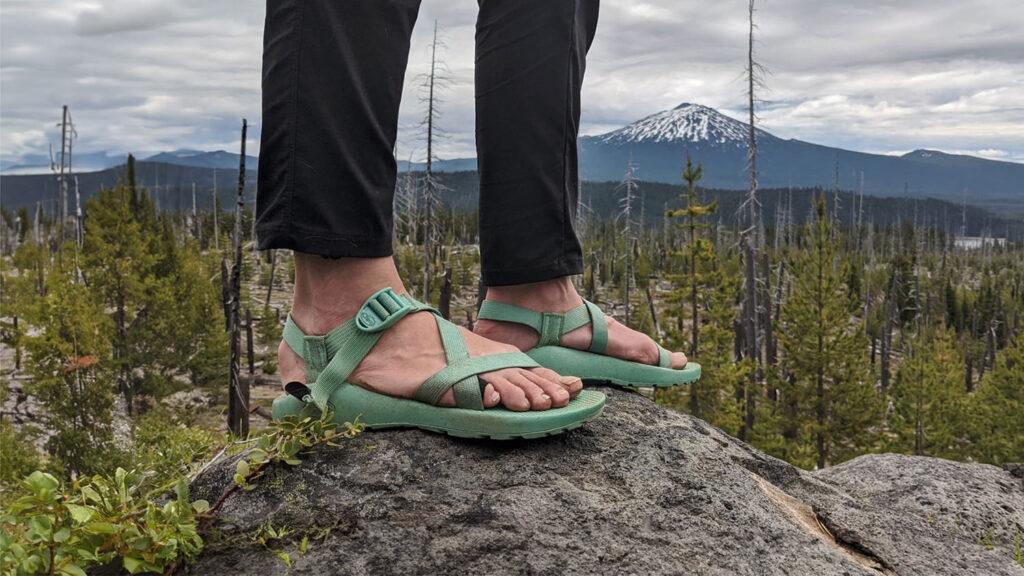
The correct shoes may either make or ruin a climb. Although classic hiking boots provide strong ankle support and protection, hiking sandals’ rising popularity points to another way to approach the mountains. In order to assist you choose the footwear that best suits your hiking style and terrain, this article examines the advantages and disadvantages of both hiking boots and hiking sandals.
The Stalwart Companion: Hiking Boots
Hikers have long turned to hiking boots for good reason. They give unmatched defence against the elements and difficult terrain. While waterproof membranes keep your feet dry in damp conditions, its strong design safeguards your feet from rocks, roots, and other hazards. Many hiking boots’ high-cut designs give vital ankle support, therefore lowering the danger of sprains and twists—especially when carrying a big pack or negotiating uneven territory.
In colder climes, hiking boots’ extra insulation is a big benefit since it keeps your feet warm even in sub-zero conditions. Moreover, the strong soles of hiking boots offer a consistent foundation that helps balance and lessens tiredness on extended trips. There is a trade-off, though, for this robustness. Hiking boots might be hefty and cumbersome, thereby slowing you down and raising effort required. In order to guarantee a good fit, they also need a break-in period; poor ventilation can cause painful, sweaty feet in hotter temperatures.
Sandal Hiking: Accepting the Environment
On the other hand, hiking sandals present a freeing substitute for shoes. Their open design guarantees optimal breathability, so keeping your feet cool and dry in hot and humid surroundings. Hiking sandals are lightweight, which lessens tiredness and enables faster, more nimble trail movement. They also dry rapidly following water crossings, therefore removing the pain caused by wet boots. A more natural walk is encouraged by the simple design of hiking sandals, which over time strengthens foot muscles and enhances balance.
Hiking sandals, however, also have some restrictions. The most clear-cut is the less protection provided than from hiking boots. Your feet come into direct contact with the elements, therefore increasing your chance of wounds, scrapes, and insect bites. Due to their lack of ankle support, hiking sandals are not recommended for carrying big loads or navigating extremely difficult terrain. Usually unfit for walks in snow or icy situations, hiking sandals provide little protection from cold weather.
Selecting the Correct Footwear: Considerations
The terrain, weather, and duration and difficulty of your intended trek will all influence whether hiking boots or hiking sandals are best for you.
Terrain: Hiking boots offer the required protection and ankle support for difficult terrain with slick, uneven surfaces, loose pebbles, and steep inclines. For reasonably flat pathways, well-maintained trails, and dry conditions—that is, for hiking sandals—better fit.
Hiking boots with waterproof membranes are crucial in wet, muddy, or snowy circumstances. When it’s hot, dry and breathability and quick drying are critical, hiking sandals are perfect.
Hike Length and Difficulty: Hiking boots provide the stability, support, and protection required to reduce tiredness and avoid injuries on long, arduous hikes with heavy backpacks. For shorter, less taxing walks where agility and breathability take front stage, hiking sandals are a decent choice.
Personal Preference: In the end, it’s up to you to decide between hiking boots and hiking sandals. While some hikers enjoy the mobility and lightness of hiking sandals, others value the safety and security boots offer. To choose the best path for you, take into account your comfort level, hiking technique, and the particular challenges of your intended trip.
Closing the Divide: Hybrid Choices
Understanding the different benefits of hiking boots and hiking sandals, some producers now provide hybrid shoes meant to blend the best of both worlds. Though they offer greater protection and support than hiking sandals, these “trail shoes” sometimes have a low-cut design with more ankle flexibility. For hikers seeking more agility and breathability than standard boots offer but yet need more protection than hiking sandals can provide, these can be a decent compromise.
Final Thought:
The hiker’s arsenal should include both hiking boots and hiking sandals. You can select the shoes that best fit your demands and guarantees a pleasant and fun hiking experience by carefully weighing the terrain, weather, trek difficulty, and personal tastes. Whether your preferred form of protection is the strong defence of hiking boots or the freeing sensation of hiking sandals, keep in mind that a good and fun time on the path depends on appropriate shoes.