
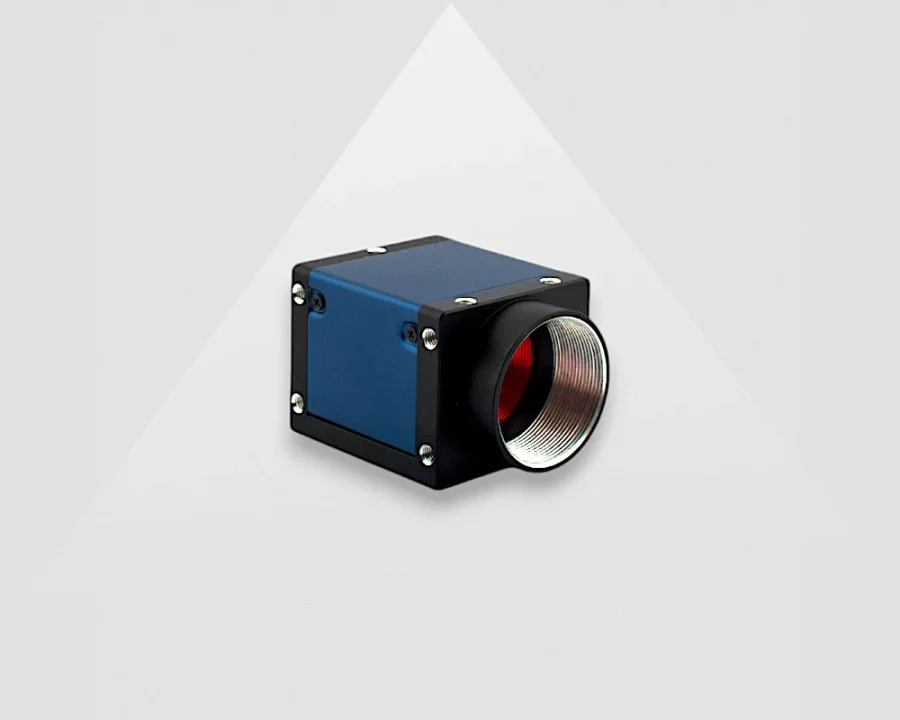
A computer vision camera’s function in contemporary technology has expanded significantly from its humble beginnings in simple picture capturing and primitive motion detection. Modern, high-tech machine vision systems in a variety of industries rely on this hardware. The computer vision camera is an essential instrument that allows robots to accurately observe, assess, and react to their surroundings. It finds widespread use in robotics, transportation, agriculture, healthcare, and manufacturing.
An essential component of computer vision is the camera, a sophisticated device that can record images and convert them into data that computers can understand. One advantage of a computer vision camera over regular digital ones is that they are designed to be analysed by computers rather than by humans. These cameras are able to work well in automated settings that require accuracy, consistency, and speed because of this small but significant difference.
The automation of manufacturing processes is one area where computer vision cameras are proving to be quite useful. The use of visual systems that can verify components in real time has replaced a large amount of manual labour on assembly lines. As components go along a conveyor, a computer vision camera can measure their dimensions, spot minute defects, and keep them orientated correctly. The whole manufacturing process becomes more efficient as a result of this, which speeds up production while decreasing waste and mistakes.
Another industry that has started to use computer vision cameras is agriculture. These cameras are finding new uses in contemporary farming, including disease detection, crop monitoring, and autonomous harvesting assistance. A computer vision camera can be used to count plant populations, evaluate the health of leaves, and detect ripe fruit because to its capacity to discern between various colours, textures, and shapes. More sustainable farming practices, lower pesticide usage, and higher yields are all outcomes of this.
Another field where computer vision cameras are showing their worth is healthcare. These cameras are allowing for significant improvements in medical treatment, from early diagnosis to surgery aid. One application of computer vision cameras is in dermatology, where they can monitor the progression of skin lesions over time, allowing doctors to spot cancerous alterations earlier. The camera plays a crucial role in navigating complicated anatomical landscapes with greater precision, and robotic surgical tools guided by vision systems are becoming more popular in operating rooms.
Autonomous cars use computer vision cameras, which are more futuristic but becoming more commonplace. To make split-second decisions about navigation, obstacle avoidance, and traffic compliance, self-driving cars rely largely on a combination of sensory inputs and sensors. Vehicles equipped with computer vision cameras can see obstacles such as other vehicles, people, road signs, and lane markers. In order to make sure the vehicle is safe and functional, algorithms are used to process the data it gathers and direct its motions.
The usage of computer vision cameras has grown nearly universal in the field of security and surveillance. These cameras are crucial for a variety of purposes, including public space monitoring and private property protection, because they can recognise people, detect suspicious conduct, and notify authorities of any dangers. Instead of passively recording footage for subsequent analysis, computer vision cameras actively assess the scene in real time and trigger automated replies or alarms as needed, unlike typical CCTV systems.
The computer vision camera has also found a home in retail settings. These cameras are used in retailers to monitor inventory, assess consumer activity, and track customer mobility. Retailers can gain significant insights about customer product interaction, store traffic patterns, and operational improvement opportunities with the help of data analytics and visual data captured by computer vision cameras.
Inventory management has been completely transformed in the logistics and warehousing industries by the computer vision camera. Cameras installed throughout a distribution facility may scan barcodes, ensure the safety of shipments, and guide robots in their search for and sorting of items. Automated visual technologies have made these hitherto labour-intensive and error-prone processes much faster and more precise. Improving supply chain efficiency, the computer vision camera verifies that every item is present, gets the right route, and arrives on time.
With the increasing complexity of urban centres, there is great potential for the integration of computer vision cameras into traffic control systems. These cameras help make cities smarter and safer by keeping an eye on intersections, finding congestion, and detecting traffic offences. In addition, traffic light control systems that incorporate real-time visual data may respond dynamically to changing road conditions, which in turn reduces travel times and bottlenecks.
Many academic and educational institutions have also started to rely heavily on computer vision cameras. These cameras are used in labs for taking pictures of experiments that are too precise for humans to handle. Innovative pedagogical practices, such remote labs, augmented reality, and real-time feedback for skill development, are made possible by vision systems in educational institutions. The computer vision camera is useful in many fields of study, from engineering to biology, because to its versatility.
Broadcasters and coaches in the sports industry are getting inventive using computer vision cameras. Its applications range from monitoring player motion and team formation analysis to providing referees with more precise decision-making tools. A computer vision camera’s high-speed and high-resolution capabilities allow it to capture fast-paced action with an unprecedented degree of detail, providing fans with an enhanced viewing experience and experts with valuable insights.
A computer vision camera’s applications are expanding beyond the real world and into the virtual one. A computer vision camera is essential for spatial mapping and gesture detection in the realm of augmented and virtual reality. These features allow for more natural and intuitive digital content engagement, creating an immersive user experience. The role of the computer vision camera in merging the virtual and real worlds will become increasingly important as the metaverse develops further.
Technically speaking, developments in processing power, algorithmic sophistication, and sensor quality have allowed for the growth of computer vision cameras. Thanks to their lightning-fast processing rates and extraordinarily high resolutions, modern cameras can pick up subtleties that would otherwise go unnoticed. Computer vision camera data can be processed in ways that enable prediction, categorisation, and real-time decision-making when combined with machine learning and artificial intelligence.
In the years to come, the computer vision camera will play an increasingly important role. Accurate and trustworthy visual input will be in high demand as systems becoming increasingly autonomous and linked. 5G, edge computing, and sophisticated AI models are all coming together to make vision systems even better. Intelligent machines’ decision-making centres will soon include computer vision cameras, which are now considered peripheral devices.
However, we must not overlook ethical problems in our haste to embrace new technology. Concerns of permission, surveillance, and privacy are heightened by the broad usage of computer vision cameras. A compromise between technological advancement and personal freedoms is necessary as these cameras grow smarter and more invasive. For the computer vision camera to be used responsibly in all businesses, regulatory frameworks will have to change as technology does.
To summarise, the computer vision camera has evolved into a game-changing instrument in many different fields. Industrial automation, urban planning, healthcare, agriculture, retail, and education are just a few of the many fields that are benefiting from these cameras’ ability to let machines see and understand the world. With the advancement of technology, computer vision cameras will become more and more important in our digital age, changing the way we work, live, and interact with our environments.