

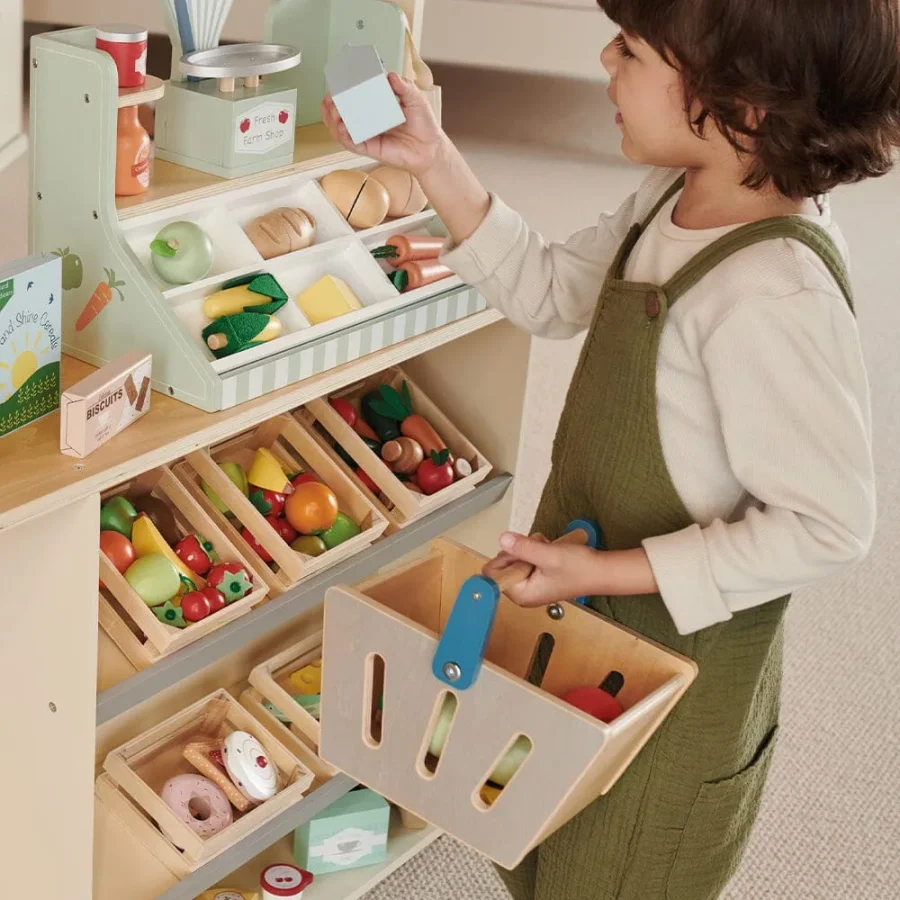
The ongoing attraction and developmental advantages of wooden role-playing toys are evidence of the strength of imaginative play in a time when digital devices and flashy electronic tools rule. Any playroom or classroom would benefit much from these classic toys since they provide a multitude of benefits for children’s cognitive, social, and emotional development. This post explores the several reasons why parents, teachers, and child development professionals still support play with wooden role-playing toys, stressing their special features and the good effects they have on the general growth of their charges.
Encouragement of play with wooden role-playing toys mostly comes from their unmatched capacity to inspire imagination and creativity. Unlike many contemporary toys with preset purposes or narratives, wooden role-playing toys let children’s imaginations run free on blank canvases. Depending on the child’s imaginative fancies, a basic wooden kitchen set—for example, might become a busy restaurant, a little home kitchen, or even a wizard’s potion lab. Wooden role-playing toys’ open-ended character lets kids create and explore countless scenarios, thereby developing their creative thinking and problem-solving ability—qualities absolutely vital for their cognitive development.
Another big benefit of wooden role-playing toys is their tactile character. Children are interacting with smooth, cold screens more and more in a world when warm, textured surfaces of wooden toys offer a novel sensory experience. Particularly helpful for children’s sensory development, the weight, texture, and natural variances in wooden role play toys provide a rich sensory input. As youngsters interact with the toys, this tactile involvement improves fine motor abilities as well as fosters a closer connection with the surrounding physical environment.
One major difference between many of their plastic counterparts and wooden role-playing toys is their durability. Well-made wooden toys are strong enough to resist the demands of intense play, usually spanning years or even generations. This lifetime not only makes hardwood role-playing toys a more environmentally friendly option but also lets kids create strong relationships to their playthings. A beloved wooden dollhouse or a favourite set of wooden building blocks can become treasured items that evolve with the child to fit their changing play patterns and interests over time.
Another great argument for including wooden role-playing toys into children’s play is their adaptability. One set of wooden blocks, for instance, may be used for food in a play kitchen or even as characters in a narrative scenario, or for building projects. This adaptability helps kids to be creative and flexible, discovering fresh applications for everyday objects. Wooden role-playing toys enable such play experiences that foster cognitive flexibility and problem-solving abilities—qualities needed for success in many spheres of life.
Furthermore quite important for social development are wooden role-playing toys. Many of these games, including play kitchens, tool sets, or market booths, fit group play rather readily. Children pick up vital social skills such turn-taking, sharing, and teamwork when they role-play scenarios involving friends or family members. Children learn communication, negotiation, and empathy—all essential abilities for developing strong connections all their lives—by means of these interactions. As youngsters cooperate to create and negotiate their imagined worlds, the open-ended character of wooden role-playing toys lets more natural social interactions occur.
One should not undervaluate the instructional worth of wooden role-playing tools. Many of these toys quietly include educational components into play. A collection of wooden fruits and vegetables can teach about nutrition and classification; a wooden cash register and toy money can introduce fundamental math ideas. Wooden role-playing toys are beautiful because they let kids spontaneously absorb knowledge and abilities by means of their creative adventures, therefore transforming learning from a tool to a game.
Toy choice now heavily relies on environmental awareness, hence wooden role-playing toys provide a more sustainable substitute for plastic toys. Made from sustainable materials, premium wooden toys sometimes biodegradable and more eco-friendly than their plastic rivals. Choosing wooden role-playing toys can help parents and teachers teach young children an early respect of natural materials and environmental responsibility.
Another reason wooden role-playing games appeal to adults and children alike is their pleasing look. Wood’s natural beauty—warm tones and organic textures—allows for a visually appealing play area. Because wooden role-playing toys may be easily incorporated into home décor, they are more likely to be kept out and accessible for unplanned play. Unlike trendy plastic toys that may quickly feel outdated, many wooden toys’ classic shape also means they remain visually appealing as children grow.
Wooden role-playing toys can be rather important for language development. Children frequently narrate their actions, develop dialogues for characters, and explain situations while they pretend with these toys. Natural storytelling promotes narrative skills, sentence formation, and vocabulary development. These play situations offer abundant chances for language development and practice, whether they involve a youngster building a fantasy world with wooden figurines or acting out a chef in a wooden kitchen.
Particularly valuable in today’s fast-paced, overstimulating environment is the calm and deliberate play that wooden role-playing toys promote. Wooden toys promote a more conscious, intentional kind of play than electronic toys that could overwhelm with lights, music, and movement. Children who learn concentration and focus—skills increasingly vital in both scholastic and professional environments—may grow to have these abilities. Simple wooden role-playing toys let kids interact more deeply with their play, therefore extending their attention span and creating more immersive play experiences.
Additionally providing great chances for fine motor skill development are wooden role-playing toys. In a play kitchen, manipulating little wooden pieces, stacking blocks, or using toy utensils all call for exact motions that hone hand-eye coordination and dexterity. From writing and sketching to more difficult jobs later in life, these abilities are absolutely vital for many facets of growth.
Wooden role play toys get still another level of value from their historical and cultural relevance. Many wooden toy designs have been handed down through the years, tying youngsters to play customs spanning civilisations and eras. Children can learn much from this link to history and legacy by investigating several lifestyles and seeing how play has changed with time.
Additionally very helpful for children’s processing and understanding of their surroundings are wooden role-playing toys. Children can investigate adult positions, replay events from their own life, and negotiate difficult emotions or circumstances by means of role-playing scenarios. Children find a safe environment in this kind of play to grow emotionally intelligent and make sense of their experiences.
Another great benefit is the way wooden role-playing toys fit various age groups. Many wooden toys can develop with the child and provide various play opportunities as his interests and abilities change. For example, a basic wooden shape sorter might begin as a tool for learning fundamental shapes and colours but as the child gets older it might become part of a more intricate imaginary play scenario.
Ultimately, there are many and convincing reasons to inspire play using wooden role-playing tools. From encouraging imagination and creativity to helping cognitive, social, and emotional growth, these classic toys provide a lot of advantages for young people. Parents and teachers alike would be wise to choose them since of their eco-friendly character, adaptability, and durability. Wooden role-playing toys offer a much-needed link to tactile, imaginative play that is vital for overall child development in a society when technology usually rules.
Wooden role-playing toys stand out as effective tools for developing well-rounded, creative, and capable people as we continue to realise the value of play in learning and development. Encouragement of play with these adaptable and interesting toys helps youngsters develop the abilities and traits required to flourish in an always changing environment, therefore investing in their future success. Wooden role-playing toys’ ongoing appeal reminds us of the ageless worth of simple, imaginative play in forming young brains and hearts.